
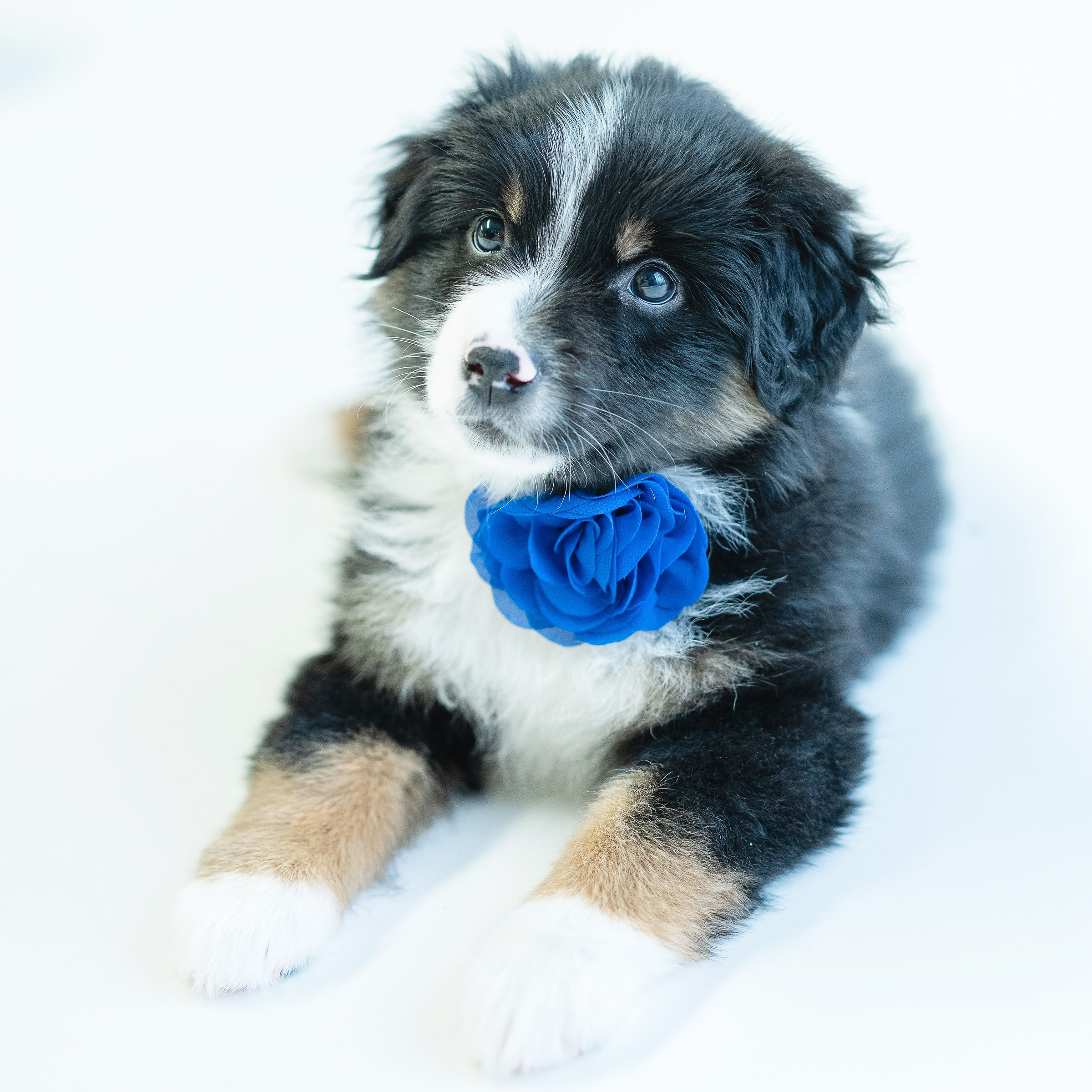
The Charm of Three Colors
“Sometimes the simplest palette creates the most unforgettable dog.”
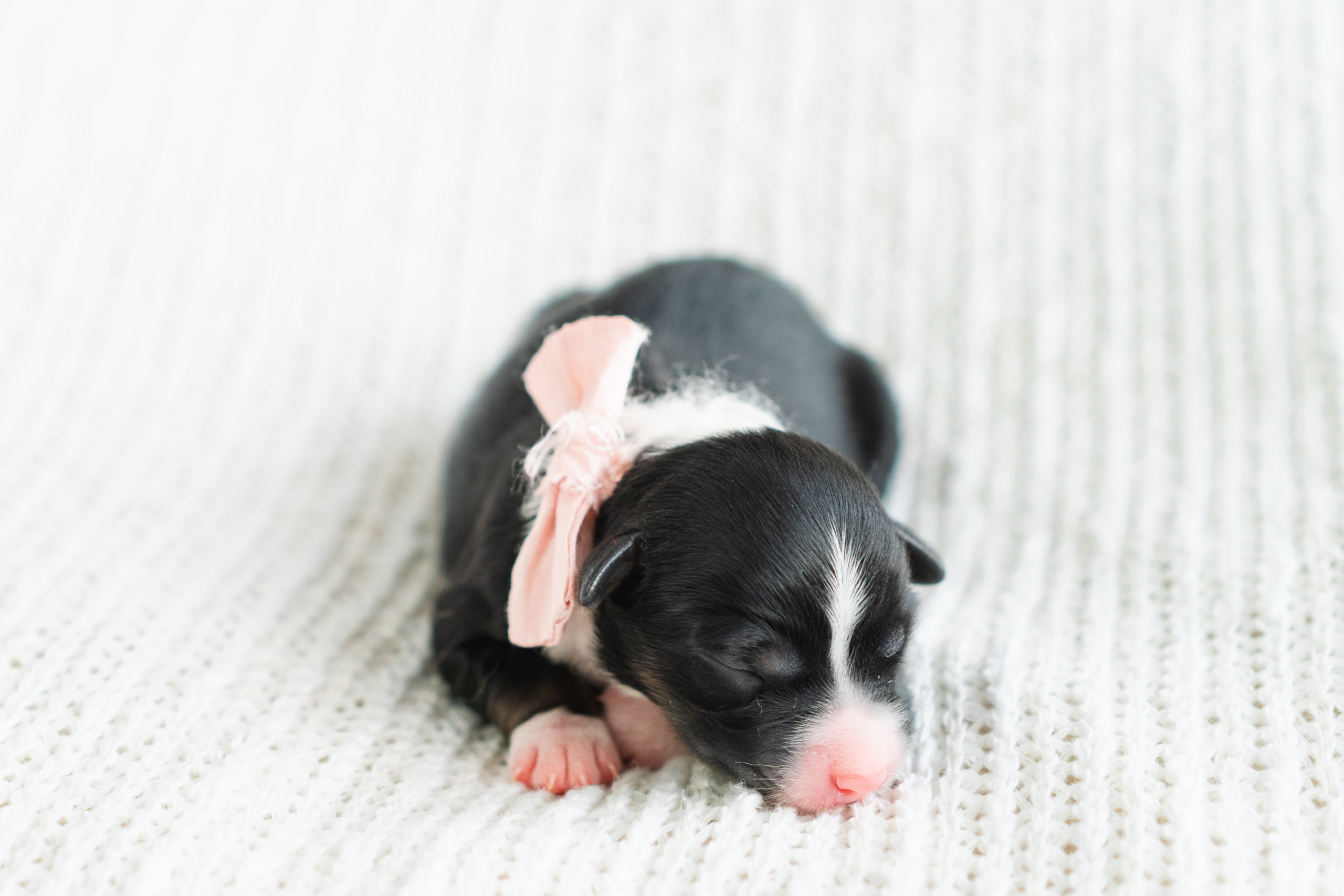
We recently welcomed our very first black tri-color dog into our program: Delta. With a delicate triangular white patch on her back and an almost perfectly black split face, her pattern is both classic and beautifully unique. From the moment she was born, she captured our hearts.
She also reminds us so much of her father, Defiance (AKC GCH Moonbaby’s Molan Labe – photo credit Melissa Zobbel)—an accomplished and highly awarded stud who has produced many champions and is considered one of the foundation black tri dogs in our breed. Delta looks almost like his little copy of his split face, carrying the same classic coloring and expression, even though she did not inherit his striking blue eyes. That familiar look makes her feel both new and wonderfully connected to the dogs who shaped our love for this timeless pattern.
There is something timeless about the tri-color coat. The rich contrast, the expressive tan points, and the crisp white markings seem to highlight every expression and movement. Delta carries all of that classic charm, yet in a way that feels entirely her own—like a small, living piece of art.
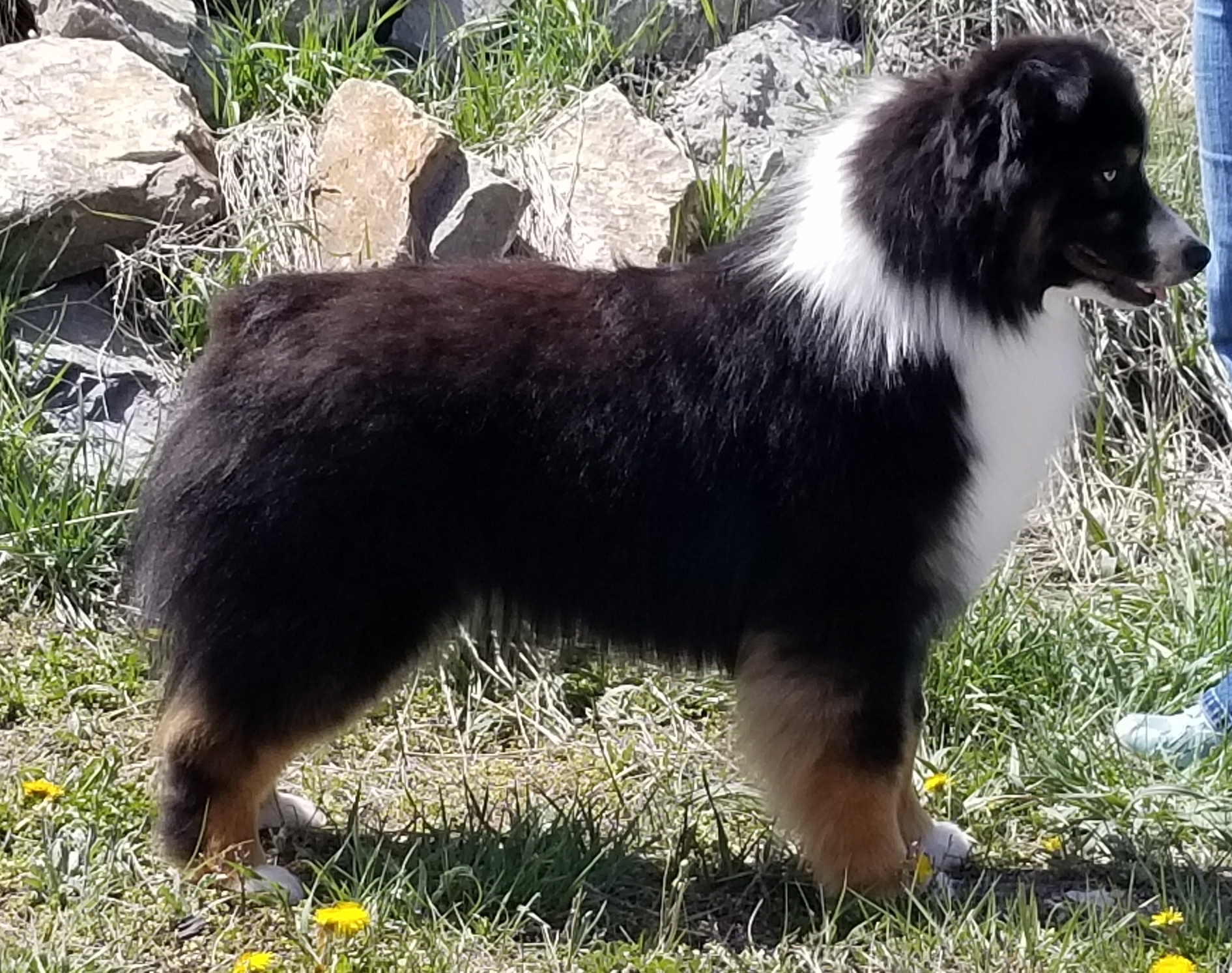
What Is a Tri-Color Dog?
A tri-color dog carries three distinct coat colors that appear in a natural, balanced pattern. In our breed, this means a black or red base color, bright white markings, and warm copper points. The copper typically appears above the eyes, on the cheeks, chest, and legs, adding expression and warmth to the dog’s overall look. The result is a coat that feels balanced and harmonious, almost as if nature carefully placed each brushstroke. Some dogs, however, may be bi-colored instead, meaning they have only the base color and white trim, without the copper points. Both patterns are correct and beautiful, but the presence of all three colors is what gives the tri-color dog its classic, expressive appearance.
Across many herding and sporting breeds, the tri-color pattern has remained a classic favorite for generations.
The Expression That Wins Hearts
One of the most charming features of a tri-color dog is the face. The tan “eyebrows” and cheek points create an expressive, almost human-like look. Many tri-color dogs appear as if they are constantly listening, thinking, or smiling.
These warm tan accents soften the darker coat, giving the dog a friendly and approachable expression. It’s often the reason families say they felt an instant connection when they first met their puppy.
No Two Tri-Colors Are the Same
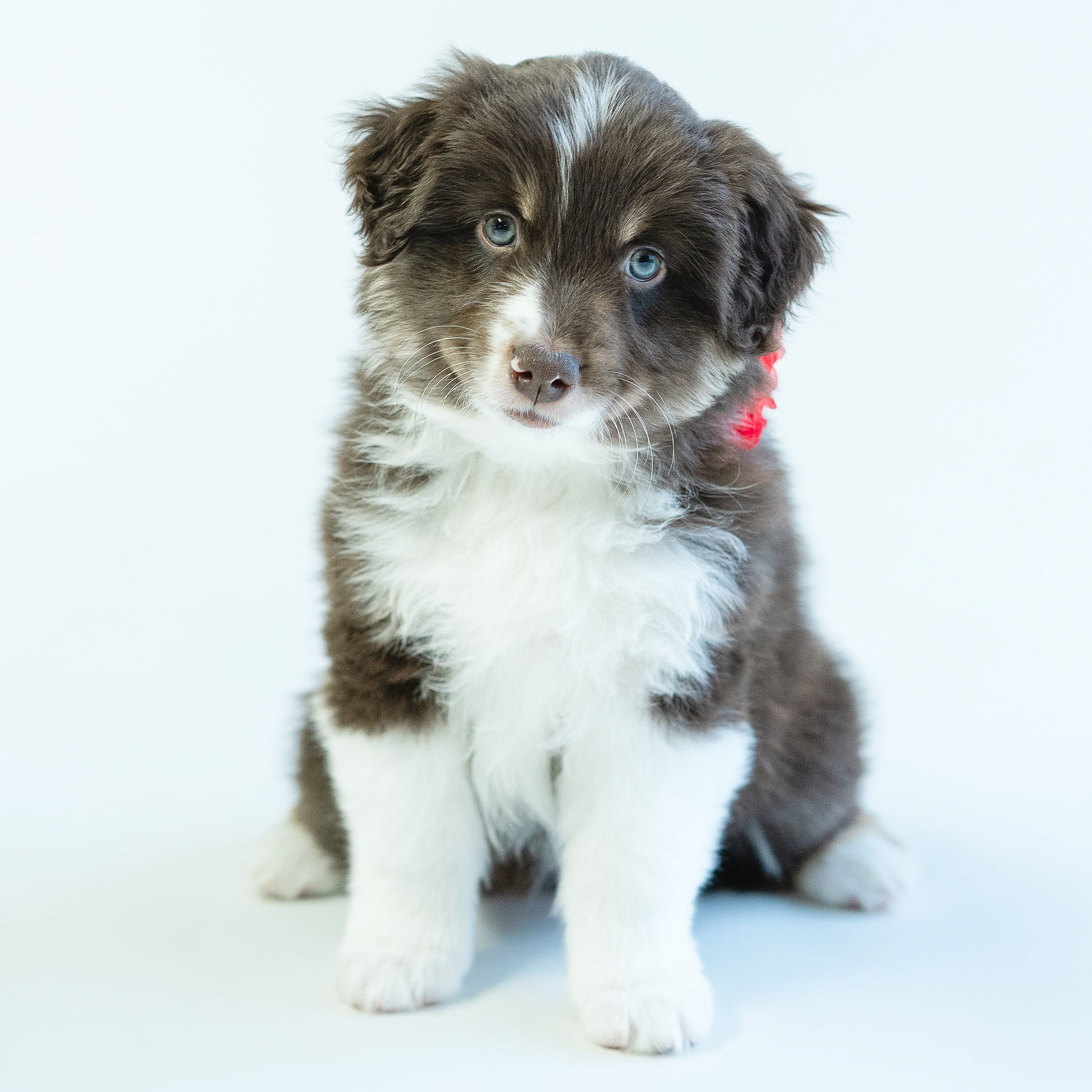
Even though tri-color markings follow a general pattern, no two dogs ever look exactly alike. Whether black or red, each tri-color dog carries warmth and expressive markings, with its own unique balance of contrast and personality.
Some have wide white collars, others just a small chest patch. Some carry bold tan points, while others have softer, lighter accents. One may have a full blaze, another a split face, and another almost none at all.
Delta’s triangular patch and dark split face make her instantly recognizable. It’s a reminder that every tri-color dog is a unique work of art, shaped by both genetics and chan
The Tri-Color in the Show Ring
In the conformation ring, tri-color dogs often stand out for their contrast and clarity. The combination of dark, copper, and white can beautifully outline a dog’s structure and movement, making details easier to appreciate from across the ring. Well-placed markings can naturally highlight the length of neck, shoulder placement, topline, and the dog’s reach and drive on the move. While structure and temperament always matter most, the tri-color pattern has a special way of enhancing the overall picture.
A recent example of this timeless appeal was seen at the 2026 Westminster Kennel Club Dog Show, where a black tri Miniature American Shepherd named “Sawyer” (GCHS CH Flying M’s Modern Day Warrior) earned an impressive second place in the Herding Group, standing among the top dogs of his entire group. He joins a long list of well-known and influential tri-pattern champions in our breed, reminding us that this classic color combination has been part of many of the Miniature American Shepherd’s most celebrated dogs.
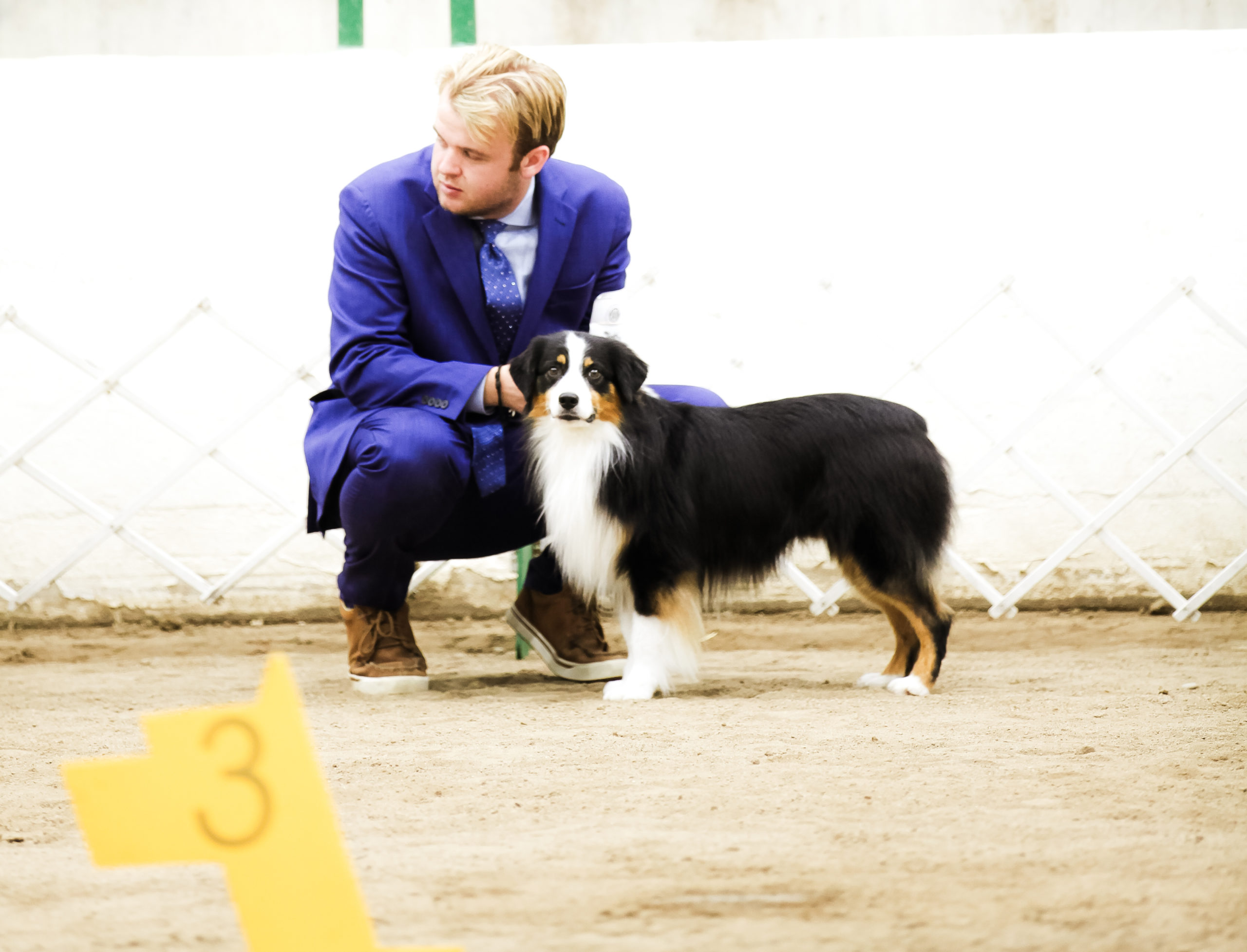
Closer to home, one of our most beloved black tri dogs, Bishop, is both a Gold Grand Champion and a certified Service Dog, known not only for his success in the ring but also for his outstanding temperament and working ability (Bishop and his Owner and Handler Tobin at the Reno Kennel Club Show in 2024). Dogs like him beautifully represent the balance of structure, character, and heart that the breed was meant to embody.
A Breeder’s Perspective on Tri-Color Dogs:
As breeders, we fall in love with each puppy for different reasons—temperament, structure, expression, and sometimes, that special spark that is hard to describe.
Tri-color dogs also offer a practical advantage from a breeding perspective. Unlike merle-patterned dogs, which must be paired carefully to avoid the risks associated with double merle breedings, tri-color dogs can be bred to any other color. Of course, all the usual genetic screenings and health testing still apply, but from a color standpoint, tri dogs offer greater flexibility. This versatility helps reduce the risk of the serious hearing and vision issues that can occur in double merle puppies.
Over time, we’ve also noticed how naturally many families are drawn to tri-color puppies. There is a warmth to their expression and a balance to their coloring that seems to capture hearts instantly, blending classic beauty with practical versatility.
A Timeless Classic
In recent years, we’ve seen trends toward simpler, more minimalist color patterns—solid coats, muted tones, and softer, more uniform looks. These styles can feel modern, clean, and very appealing, especially in today’s design-inspired world.
But just like in home décor, fashion, or architecture, there is always a place for the classics.
The tri-color dog is a timeless design that has never truly gone out of style. Its balanced contrast, natural symmetry, and expressive markings have been admired for generations. While minimalist trends may come and go, the tri-color coat remains a constant—familiar, warm, and enduring.
There is a sense of depth and character in a tri-color dog. The tan points add warmth, the white brings brightness, and the darker base creates elegance and structure. Together, the three colors form a natural harmony that feels both traditional and fresh at the same time.
Trends in color and patterns may come and go, but the tri-color dog remains a true classic. There is something about the harmony of three colors working together that feels both natural and enduring.
From the expressive tan points to the bright white markings, the tri-color coat tells a story—one of balance, warmth, and quiet elegance.
And for us, that story now includes Delta, our first black tri-color girl, whose unique little patch and soulful face remind us daily why some classics never fade.
“In a world of changing trends, the tri-color remains a forever classic.”