

Building a Healthy Foundation
Your puppy’s early health care plays a vital role in their long-term well-being. This section is designed to guide you through essential topics—including vaccines, common diseases such as Parvovirus, and routine care like deworming and parasite prevention.
With the right knowledge and support, these early decisions become a powerful foundation for a healthy, thriving life

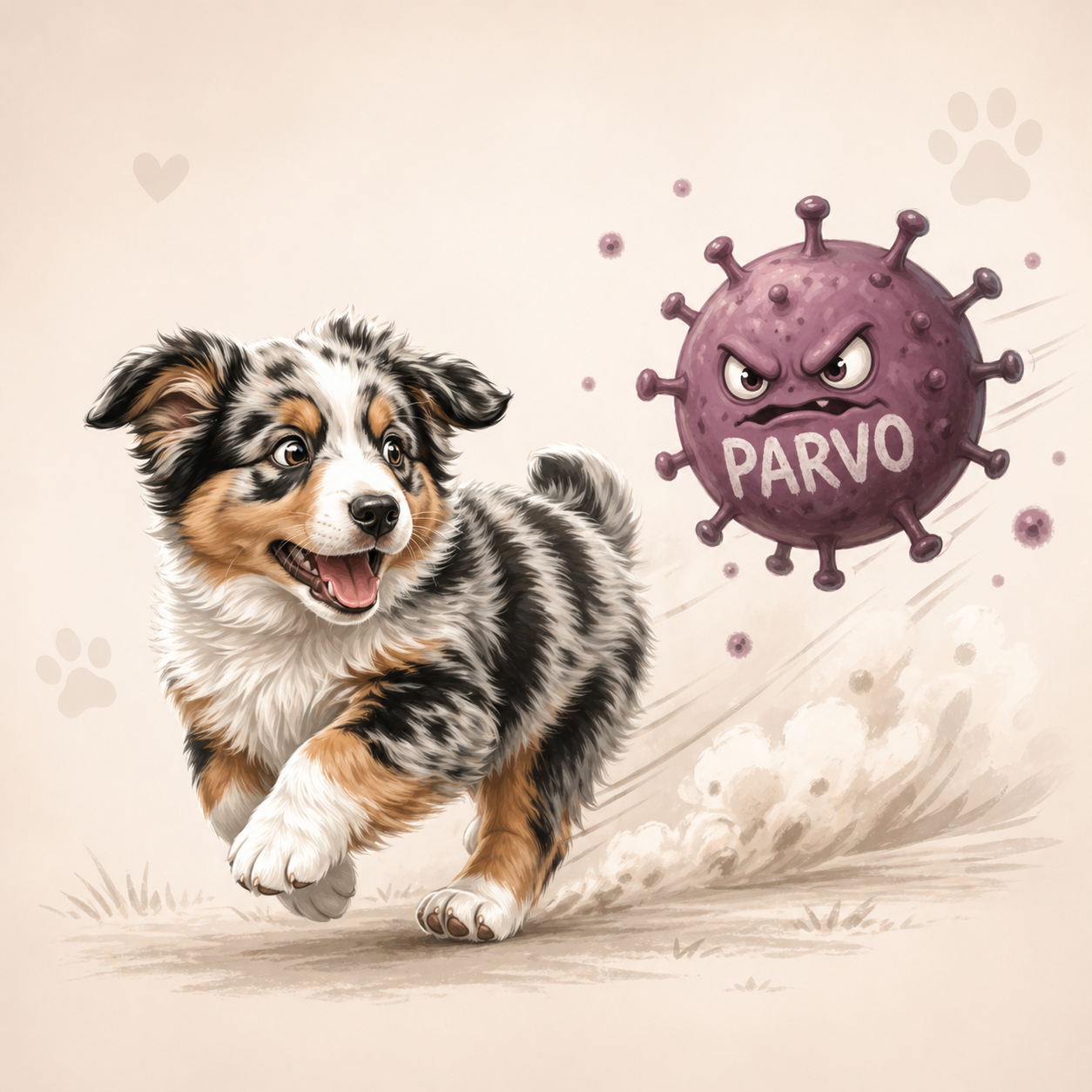
Parvovirus: Why It Matters
Parvo at a Glance
What is it?
A highly contagious virus that affects a puppy’s intestines, causing severe illness (vomiting, diarrhea—often bloody). It spreads easily through contaminated surfaces, environments, and even shoes, and can survive for months.
Why it matters:
- High mortality rate if untreated
- Treatment can require hospitalization and be costly
- Prevention is the safest approach
The vulnerable window:
- Puppies receive protection from mom (colostrum) until ~6–10 weeks
- This protection fades just as vaccines are starting
- Vaccines take 10–14 days and multiple doses to be effective
>> Most vulnerable around 8–10 weeks of age (often when puppies go home)
What we do at EverSummer Minis:
- Clean, controlled environment (including steam cleaning from ~6 weeks)
- Veterinary exam + first vaccines at ~7 weeks
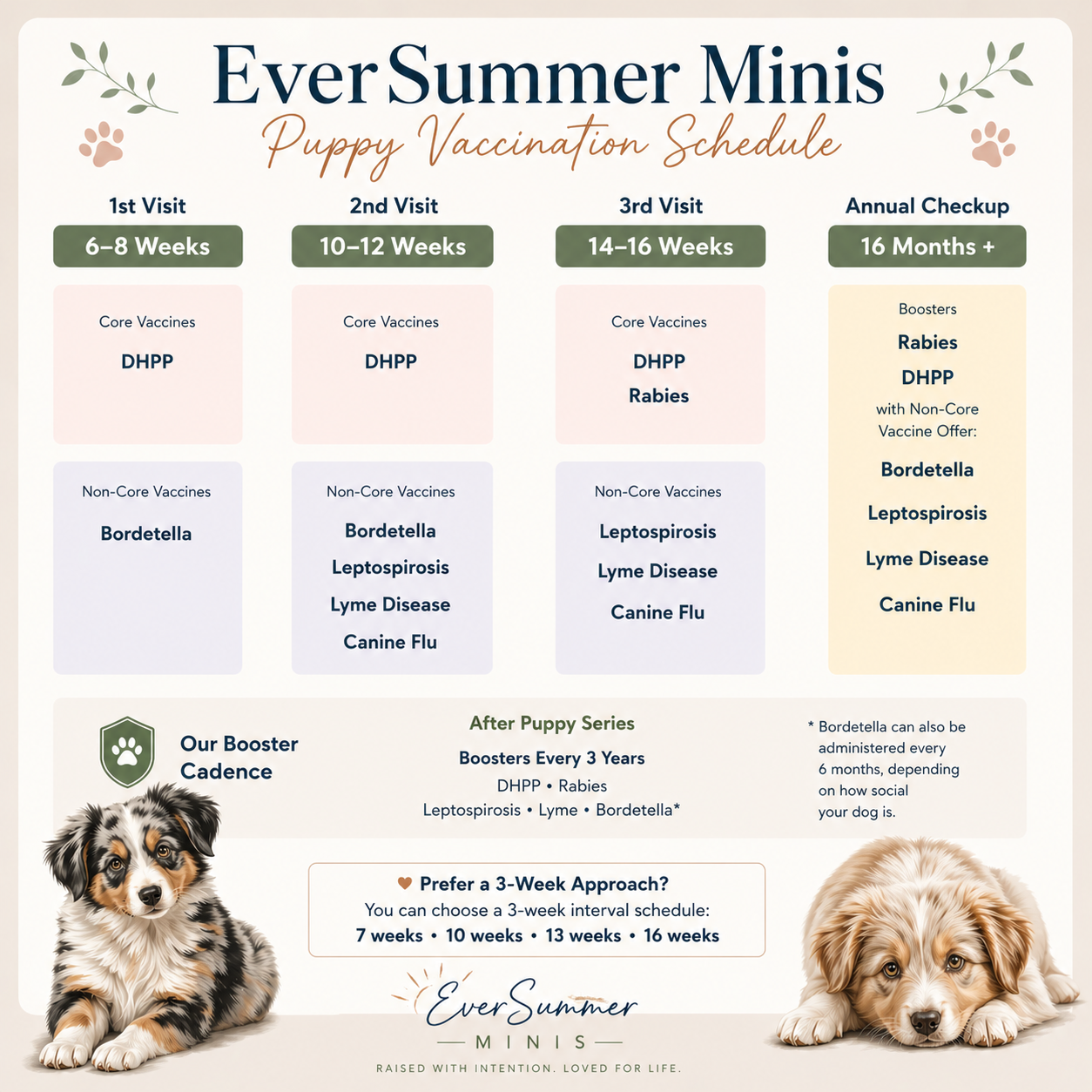
- Vaccine schedule every 3 weeks (7, 10, 13, 16 weeks)
(or every 4 weeks in coordination with your veterinarian) - Early Parvo-specific vaccine (NeoPar) at ~5 weeks for added protection
Your takeaway:
Awareness—not fear. With thoughtful precautions, you can significantly reduce risk while supporting healthy development.
Rabies Vaccine
What is it?
A legally required vaccine in most states that protects against a serious, fatal virus affecting the nervous system and transmissible to humans.
Schedule:
- First vaccine: ~16 weeks
- Booster: 1 year
- Then: every 3 years (depending on local regulations and your veterinarian)
- Save your Rabies Vaccine Certificate: Most Grooming places
What to expect after vaccination:
- Mild tiredness
- Slight decrease in appetite
- Small lump at injection site
>> Typically resolves within 24–48 hours
Call your vet if you notice:
- Persistent vomiting
- Facial swelling
- Significant lethargy
Other Vaccines: Individualized Decisions
What are they?
Optional (non-core) vaccines your veterinarian may recommend:
- Leptospirosis
- Lime
- Bordetella (kennel cough)
- Canine Influenza (flu)
When to consider them:
Higher social exposure:
- Dog shows
- Performance events
- Doggy daycare
- Dog parks
✔ Consider Bordetella + Flu (often yearly)
Outdoor / water exposure:
- Hiking
- Drinking from creeks, ponds, puddles
✔ Consider Leptospirosis/ Lime
Lower exposure lifestyle:
- Mostly home environment
- Limited interaction with unknown dogs
✔ Additional vaccines may not be needed
Your takeaway:
There is no “one-size-fits-all.” Work with your veterinarian to tailor a plan based on your puppy’s lifestyle.
Parasites & Deworming
Why it matters:
Intestinal parasites are very common in puppies. They can be passed:
- Before birth
- Through mother’s milk
Our protocol:
We use Pyrantel, a safe and well-tolerated dewormer:
- 3 weeks
- 5 weeks
- 7 weeks
- 9 weeks (if still with us)
✔ Effective for: roundworms, hookworms
⚠ Not effective for all parasites (e.g., coccidia)
Our approach with adult dogs:
- Annual fecal testing
- Treat only if needed
- No routine preventative deworming
(Lower risk due to limited exposure—no hunting or wildlife contact)
What happens when your puppy goes home?
Your veterinarian may recommend additional testing or treatment depending on your location and risk factors.
Quick note:
Mild soft stool can happen with transitions (food, stress).
>> Persistent diarrhea + low energy = call your vet

Heartworm Prevention
What is it?
A parasite transmitted by mosquitoes that lives in the heart and lungs, causing serious disease over time.
Why it matters:
- Can be life-threatening
- Treatment is complex
- Prevention is simple and effective
Prevention approach:
❄️Colder climates (e.g., Reno):
- Mosquitoes absent in winter
- Prevention typically spring + summer only
☀️Warmer climates:
- Mosquitoes year-round
- Prevention recommended year-round
Your takeaway:
Prevention is easy—and far safer than treatment. Your veterinarian will guide you based on your location.
Flea & Tick Prevention
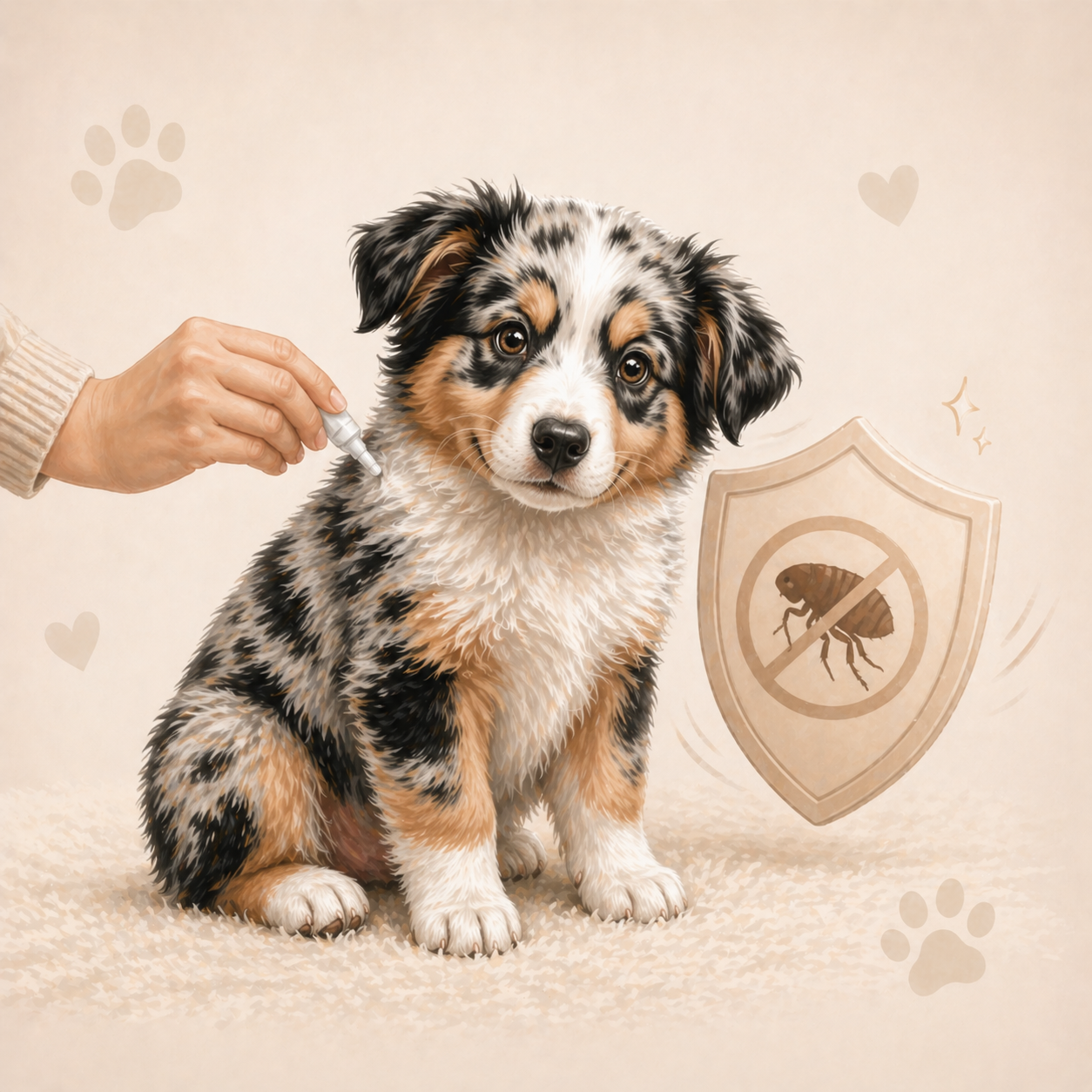
What are they?
External parasites that can cause:
- Skin irritation
- Allergies
- Transmission of disease
Why prevention matters:
Infestations are difficult and stressful to treat.
(Personal note)
We once dealt with a flea infestation after a dog returned from a show—it was no fun. Since then, prevention has been part of our routine.
What we do:
- All dogs on flea prevention
- Breeding dogs: oil-based topical products (safe for pregnancy/nursing)
What you should know:
- Options include topical or oral preventatives
- Your veterinarian will guide age-appropriate choices
Risk depends on lifestyle:
Higher exposure:
- Travel
- Outdoor time
- Contact with other dogs
✔ Consider year-round prevention
Lower exposure:
- Mostly indoor lifestyle
✔ Seasonal approach may be sufficient
Your takeaway:
Consistency is key. Prevention is far easier than treatment.
Health care in these early weeks can feel like a lot, but it truly comes down to a few key principles: awareness, consistency, and thoughtful choices.
This section is meant to give you a clear, practical framework—one that is easy to follow and adaptable to your puppy’s individual needs. The goal is not perfection, but a steady, confident approach that supports long-term health and well-being.
We are here to support you every step of the way.