A Brief Window, A Lifelong Impact
Many people assume socialization happens gradually throughout a puppy’s first year. In reality, the most important socialization period is much shorter—and far more influential. During the first 12 weeks of life, puppies are especially open to forming lasting associations with the world around them.
This critical window plays a powerful role in shaping your puppy’s lifelong:
- Confidence
- Resilience
- Trainability
- Overall temperament
The experiences your puppy has during this stage can profoundly influence how they respond to people, environments, sounds, handling, and new situations for years to come. In many ways, this is one of your greatest opportunities to shape your puppy’s future.
Safe Socialization Matters
Socialization is not simply about exposure—it is about creating positive, thoughtful experiences.
During this sensitive developmental stage, fearful, overwhelming, or traumatic experiences can also leave lasting negative impressions, potentially contributing to future fear, anxiety, or reactivity. Because of this, socialization should never involve forced exposure. The goal is to build confidence through safe, supportive introductions to the world.
At the same time, young puppies remain physically vulnerable as their immune systems develop. Diseases such as Parvovirus require families to balance meaningful socialization with thoughtful safety precautions.
Proper socialization means carefully introducing new experiences in ways that protect both your puppy’s emotional well-being and physical health.
To help guide this process, I will also be sharing a short video from With Open Arms and a Level Head demonstrating how to approach socialization safely and effectively.
Your Role: Weeks 8–12 Matter Immensely
At EverSummer Minis, we begin intentional socialization as soon as puppies are developmentally ready—starting from the earliest days they can meaningfully engage with their environment. By the time your puppy comes home, an important foundation is already in place.
However, the final four weeks of this critical socialization window—from 8 to 12 weeks—are especially valuable. This is when you continue building upon that foundation, helping your puppy safely adapt to their new home, family, and world.
This stage is a rare developmental opportunity that should be approached with intention.
To help families maximize this period, we provide With Open Arms and a Level Head—our online curriculum designed to continue Puppy Culture principles at home with structure, confidence, and clear guidance.
Your takeaway:
Socialization is not simply exposure—it is the intentional creation of positive experiences during a brief but powerful developmental window. How you approach these first 12 weeks can profoundly shape your puppy’s future.
How to Actually Socialize Your Puppy
Small, Consistent Experiences Matter Most
Socialization can sound overwhelming at first—but it doesn’t need to be complicated. Rather than trying to do everything at once, focus on providing your puppy with at least one new, positive experience 5 days a week.
Think simple, safe, and consistent. These small moments add up quickly and can have a tremendous impact over time. The goal is not to overwhelm your puppy, but to gently expand their world while helping them feel safe and supported.
A Good Rule of Thumb:
One new experience + positive exposure + calm support = successful socialization
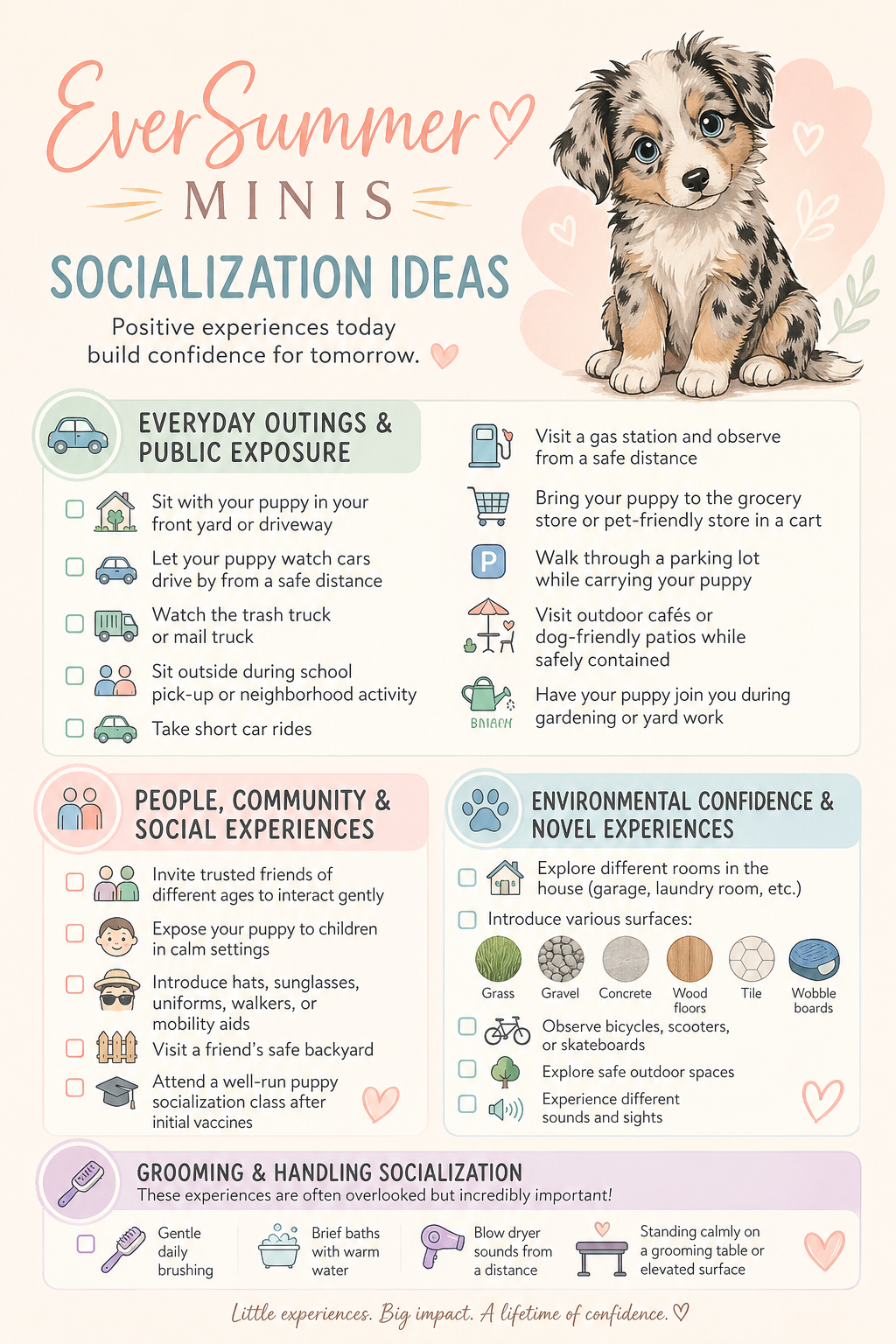
Socialization Ideas: Keep It Simple
Think variety, not perfection.
Focus on introducing your puppy to different types of safe, positive experiences rather than trying to do everything at once.
Goal:
- 1 new positive experience a day
- At least 5 days a week
- Keep sessions short, rewarding, and confidence-building
Key Socialization Categories:
- Everyday outings: car rides, front yard, stores, patios, errands
- People & community: children, friends, different appearances, safe classes
- Environmental confidence: surfaces, sounds, rooms, outdoor spaces
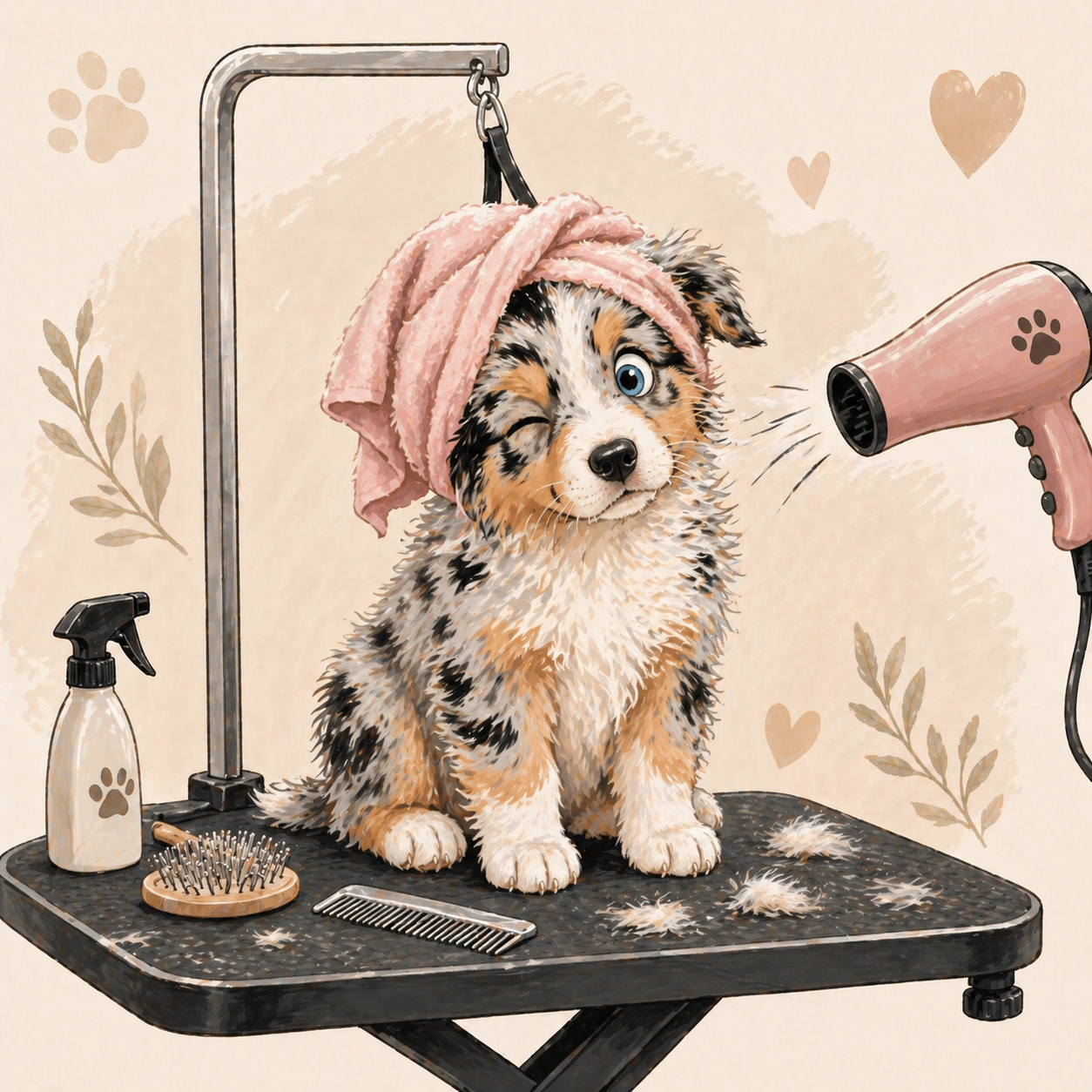
- Grooming & handling: brushing, baths, grooming table, gentle restraint
Success Tips:
- Bring treats everywhere
- Reward calm curiosity
- Increase distance if your puppy feels unsure
- Keep experiences brief and positive
- Build confidence gradually
Remember:
Socialization is not about overwhelming your puppy—it’s about thoughtfully expanding their world while helping them feel safe.
Your takeaway:
Small, consistent, real-life experiences create confident, adaptable puppies for life.
For additional guidance, Section 14 of With Open Arms and a Level Head provides deeper support for safely maximizing this critical developmental period.
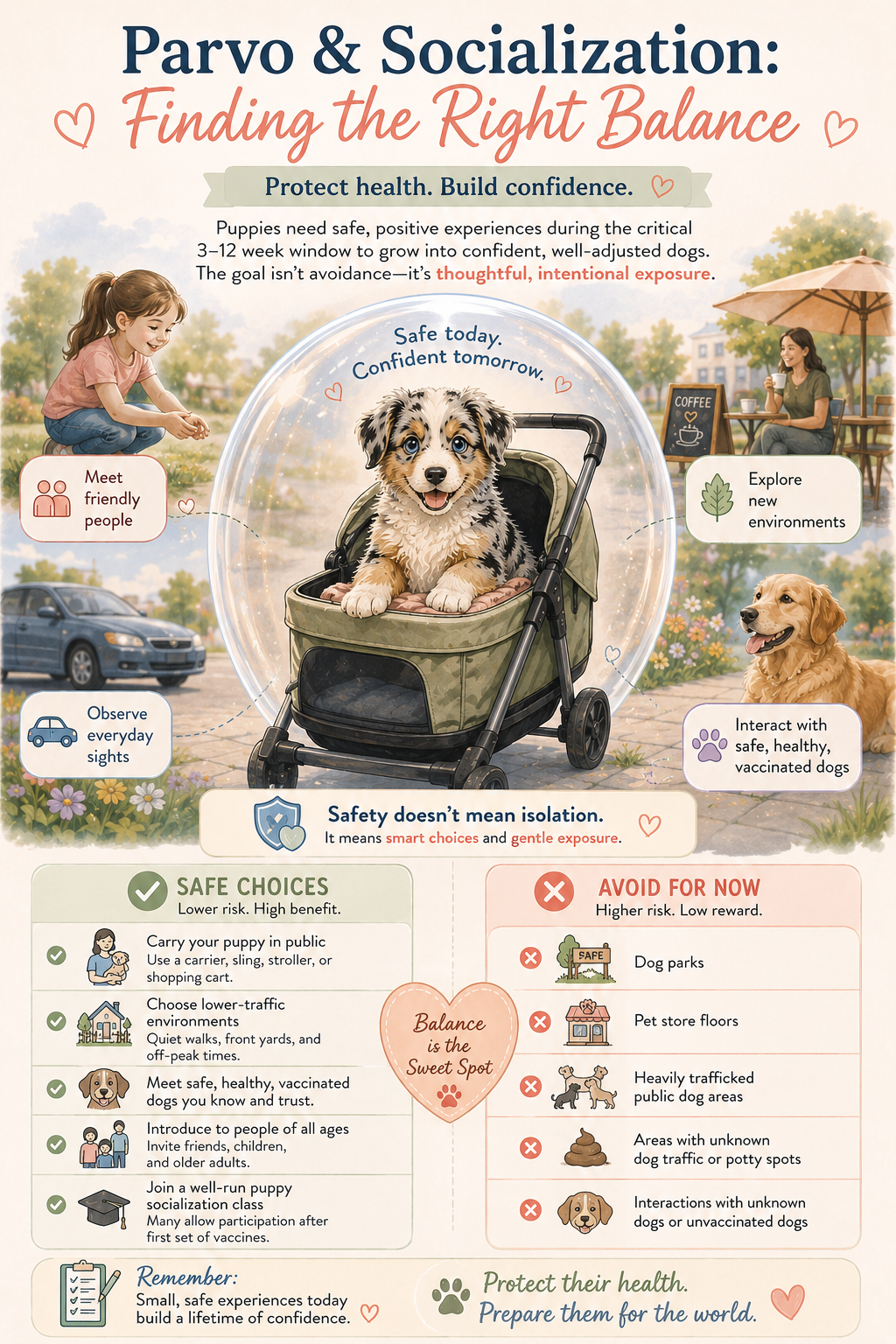
Socialization & Parvo: Finding the Right Balance
At first glance, it might seem safest to simply keep your puppy at home until they are fully vaccinated. While this approach reduces exposure risk, it also means missing a critical window for socialization.
The most important period for social development happens between 3 to 12 weeks of age. During this time, puppies learn how to interact with the world—building confidence, forming positive associations, and developing the skills that shape their behavior for life. Waiting until 16–18 weeks to begin these experiences can make it much harder for a puppy to adapt, and may increase the risk of fear-based behaviors later on.
So what’s the best approach? Not avoidance—but thoughtful, intentional exposure.
Practical Ways to Balance Safety & Socialization
1. Understand your local risk
Parvo risk varies by location. Checking local incidence can help guide how cautious you need to be.
- Avoid high-risk environments
Steer clear of places with unknown dog traffic, such as:
- Dog parks
- Pet store floors
- Heavily trafficked public dog areas
- Choose lower-traffic environments
You can still get your puppy outside while minimizing risk:
- Walk in quieter areas or at off-peak times
- Stay on the opposite side of the street from other dogs
- Avoid areas where many unknown dogs frequent
- Bring the world to your puppy—safely
- Carry your puppy in public spaces
- Use a stroller, sling, or carrier
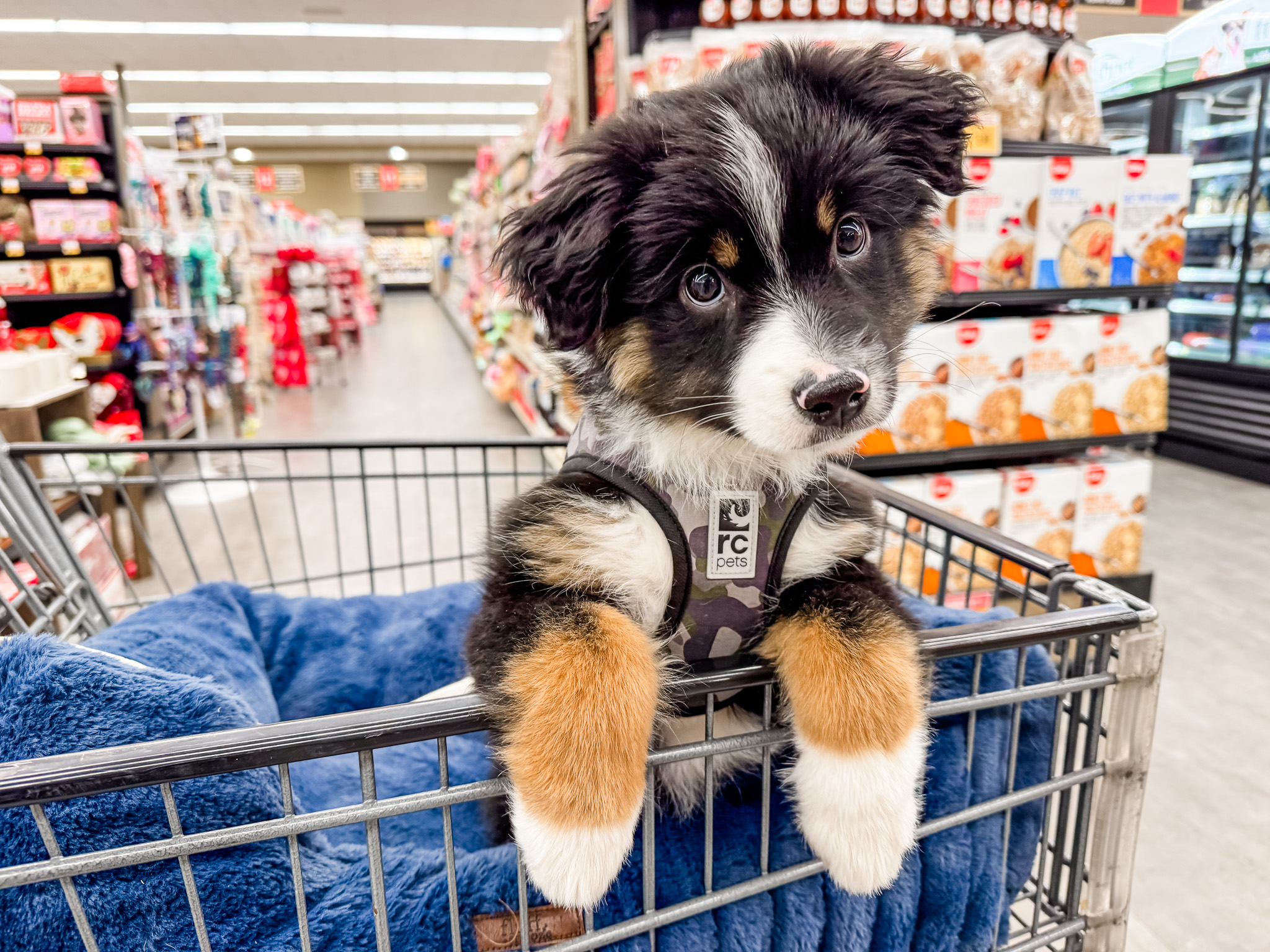
- Place your puppy in a clean shopping cart (with a blanket or barrier)
- Focus on controlled socialization
- Introduce your puppy to fully vaccinated, healthy dogs you know and trust
- Invite friends and family (including children and older adults) to interact with your puppy
- Consider enrolling in a well-run early puppy socialization class (many allow participation after the first set of vaccines)
- What socialization really means
- Safe exposure vs overwhelm
- Early confidence building
Socialization is one of the most important gifts you can give your puppy during early development. Through small, safe, and positive experiences, you are helping shape a dog who can move through the world with greater confidence, resilience, and adaptability. Progress does not require perfection—just thoughtful consistency. By intentionally expanding your puppy’s experiences while protecting both their health and emotional well-being, you are laying the foundation for a lifetime of trust, stability, and success.