What Matters Most Right Now
When most people think about puppy training, they often picture commands like “sit” or “stay.” While those skills certainly have value, the priorities for very young puppies—especially under 12 weeks—are quite different.
During this early stage, your primary focus should be on building the foundation of confidence, trust, and communication. These early lessons help shape how your puppy views the world, responds to challenges, and builds a lifelong relationship with you.
Strong foundation work can also play a major role in preventing or reducing future behavioral challenges such as fear, anxiety, aggression, excessive biting, jumping, and other difficult habits that become much harder to untrain later. By addressing these core skills early, many common puppy struggles become far more manageable.
Perhaps most importantly, early focus on attention, recall, and engagement creates the learning framework for nearly everything that follows. When your puppy understands how to focus on you, respond willingly, and view training as rewarding, future skills—including leash training—often progress dramatically faster. What may otherwise take months can often be introduced much earlier and more smoothly through thoughtful foundation work.
In many ways, these first weeks are less about obedience and more about creating a puppy who is emotionally resilient, eager to learn, and prepared for lifelong success.

The Four Core Priorities
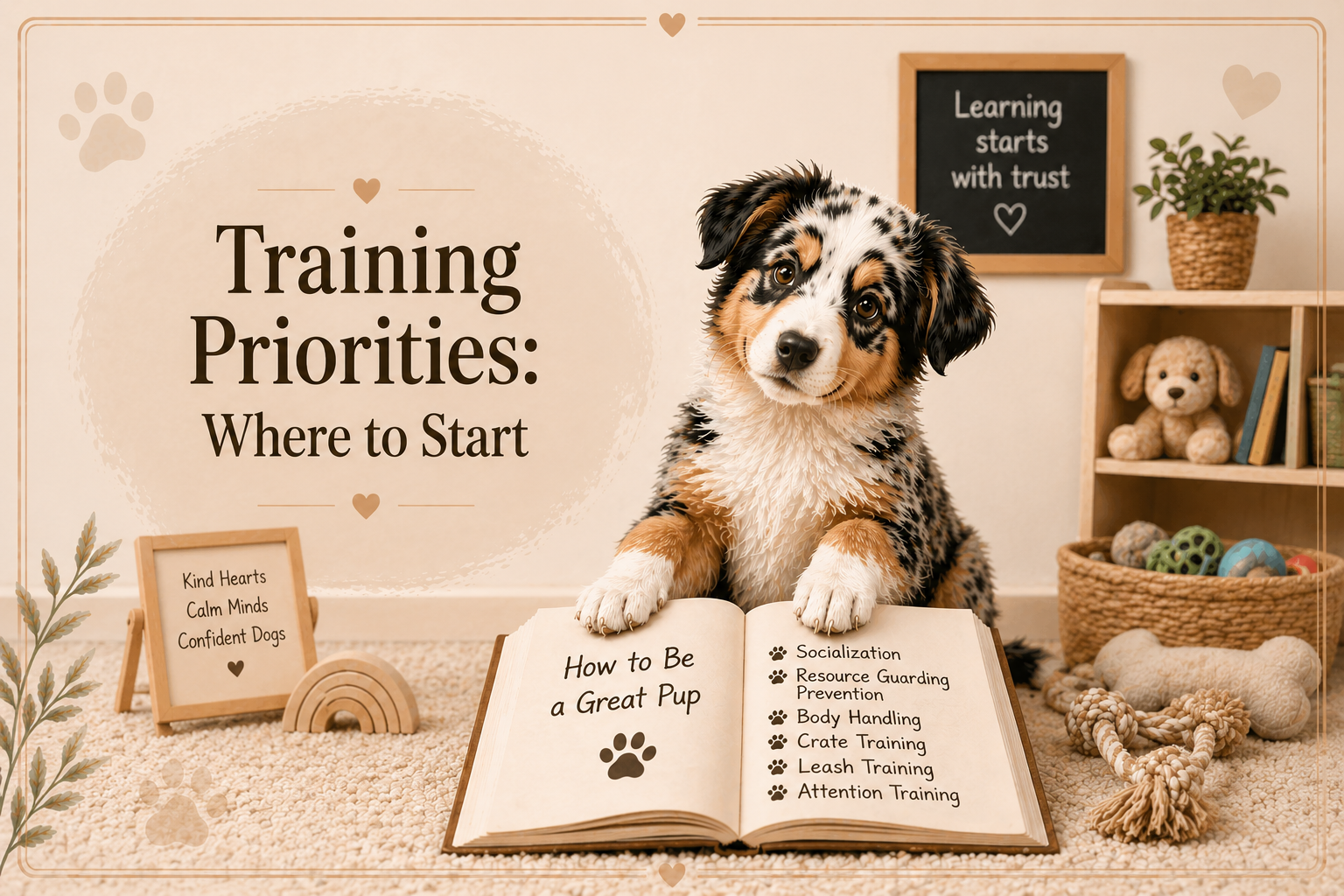
These are the areas that matter most during this early window:
1. Socialization:
Helping your puppy safely and positively experience the world—people, environments, sounds, and surfaces. This builds confidence and prevents fear later in life.
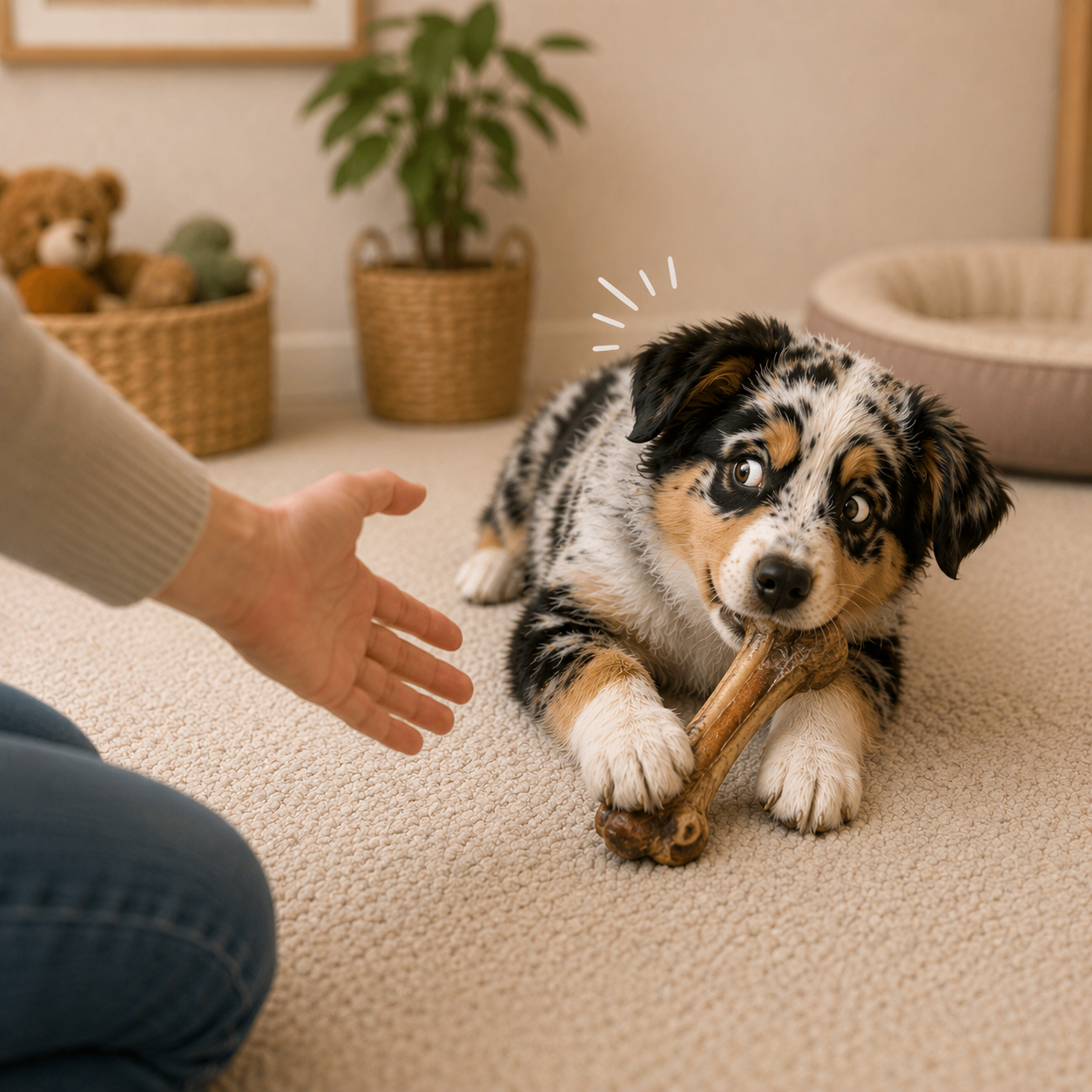
2. Resource Guarding Prevention:
Teaching your puppy that people are approaching food, toys, or valued items is a positive experience. Early work here helps prevent future issues and builds trust.
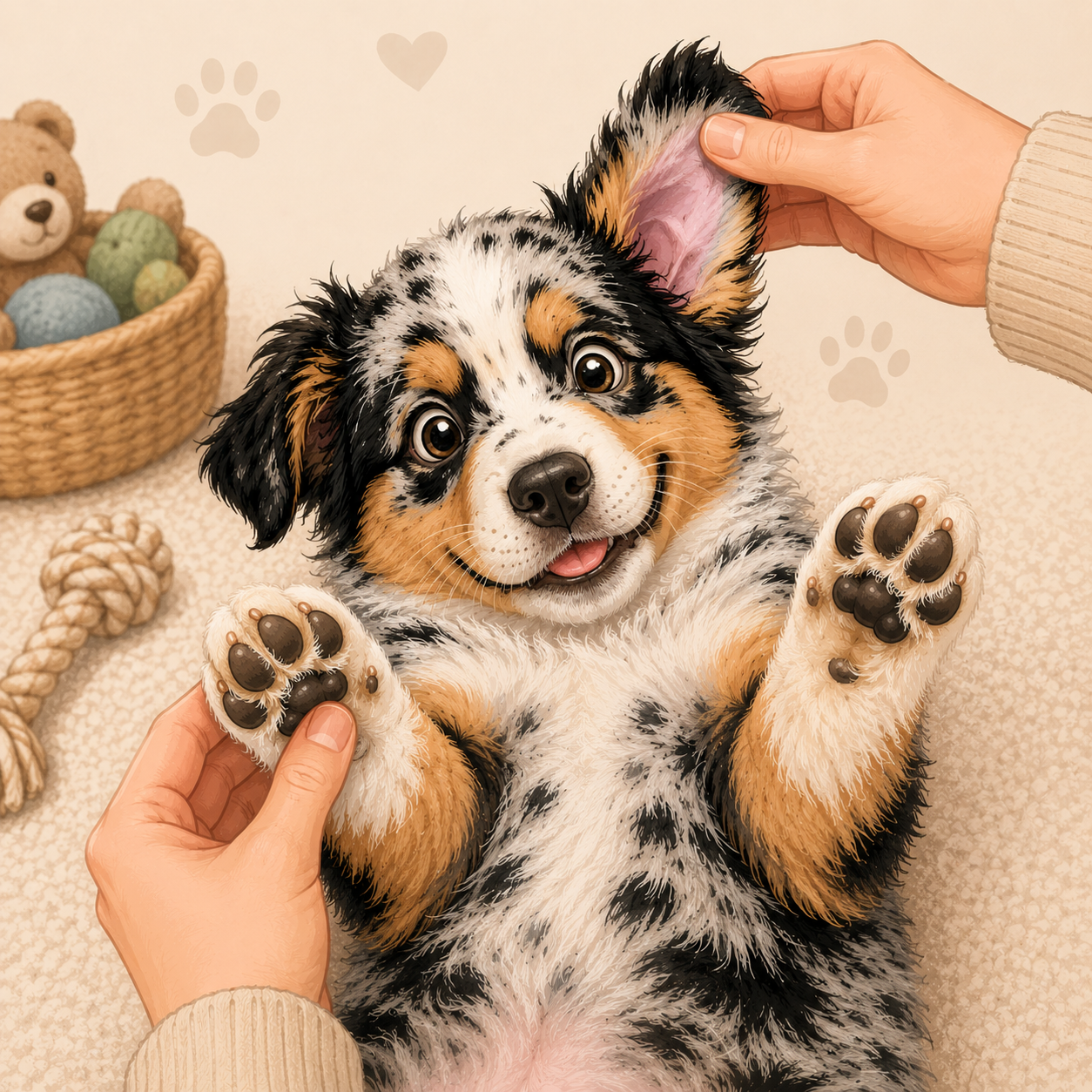
3. Body Handling:
Gently introduce your puppy to being touched—paws, ears, mouth, grooming—so they learn to feel comfortable and relaxed with handling throughout life.
4. Crate Training:
Creating a safe, positive space where your puppy can rest, settle, and learn independence. This supports both training and emotional stability.

Added Support for Your Journey
To help guide you through these important early stages in greater detail, we have also included access to the online course With Open Arms and a Level Head. This resource offers deeper instruction, practical demonstrations, and step-by-step support for shaping these foundational behaviors with clarity and confidence.
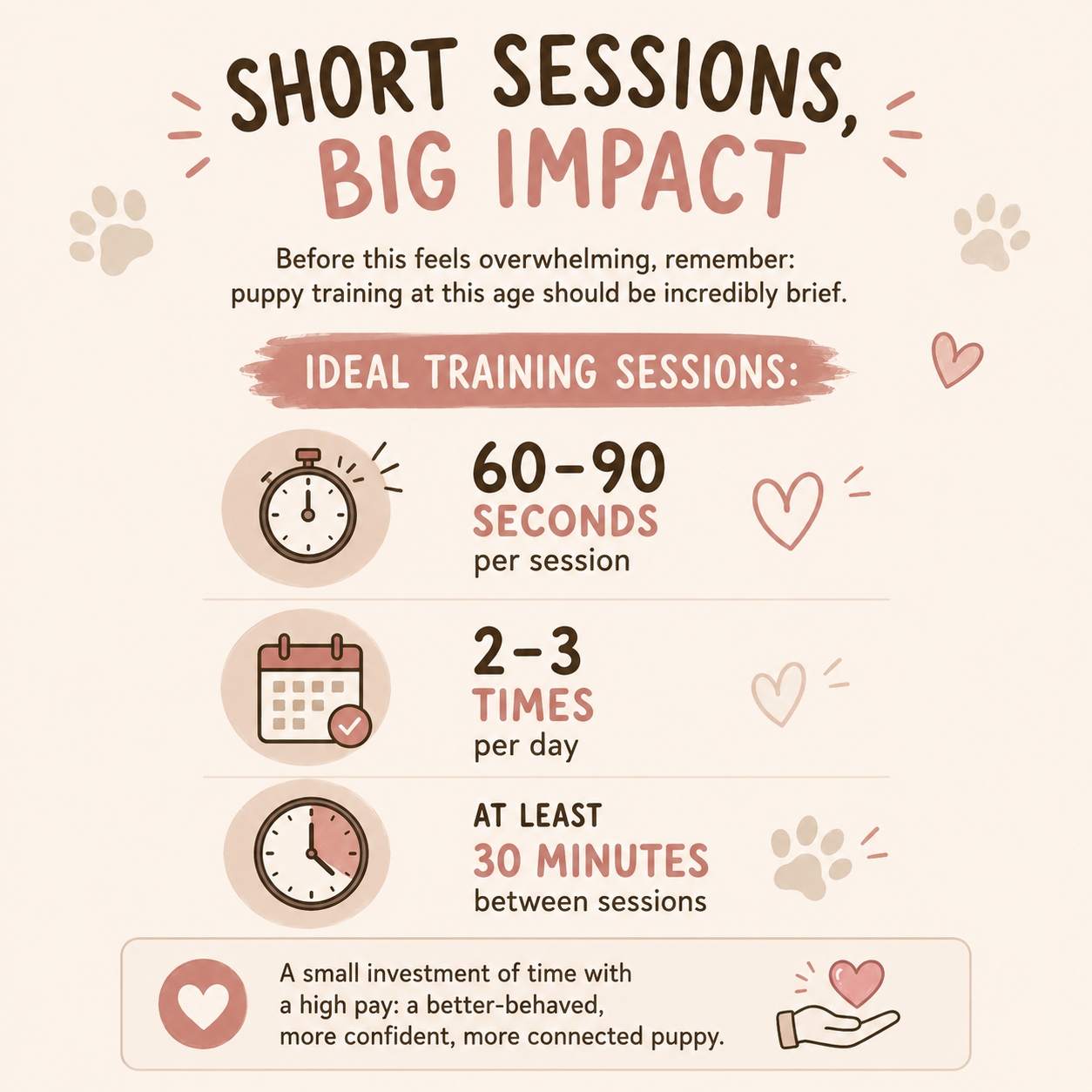
Before this feels overwhelming, remember: puppy training at this age should be incredibly brief.
Ideal training sessions:
- 60–90 seconds per session
- 2–3 times per day
- At least 30 minutes between sessions
This is a very small daily investment with remarkably high long-term returns.
Consistent, intentional short sessions can profoundly influence your puppy’s future behavior, confidence, and adaptability.
Potty Training: A Thoughtful, Developmentally Appropriate Approach
Potty training is often one of the first concerns new puppy owners have, and approaches can vary widely.
While some families choose to begin strict outdoor potty schedules immediately at 8 weeks—often requiring trips outside every 1–2 hours around the clock—our approach is a bit more holistic and developmentally considerate.
At EverSummer Minis, puppies begin learning foundational potty habits before they ever go home through structured playpen routines that encourage designated potty areas and early cleanliness patterns. We also begin introducing outdoor potty opportunities to help build familiarity and positive associations.
However, more intensive, highly structured potty training often becomes significantly more practical after approximately 12 weeks of age, when bladder maturity has improved. This approach can help reduce unnecessary overnight exhaustion for families while still building strong long-term habits.
Rather than focusing solely on immediate perfection, our goal is to create a smoother, more sustainable potty training process that balances early learning with realistic developmental expectations.
We closely follow the potty training principles outlined in With Open Arms and a Level Head, and families are encouraged to continue using this trusted resource for step-by-step support throughout the process.

A Final Thought
At this stage, training is less about obedience and more about building trust, communication, and confidence.
By prioritizing these foundations early, you are not simply teaching behaviors—you are creating a puppy who is easier to guide, more resilient, and better prepared for lifelong learning.
When the foundation is strong, everything else becomes easier.