
Week 2: Finding Your Rhythm Together
Congratulations—you survived the first week with your puppy!
By now you’ve probably celebrated some wins, cleaned up a few accidents, lost a little sleep, and started discovering your puppy’s unique personality.
This week, I want to focus on one of the most important topics in raising a puppy: creating a routine that works for your family.
Notice I said routine, not schedule.
Puppies—and people—do best with predictable routines rather than rigid timetables. Life happens. Work schedules change. Children have activities. Some days are busy, while others are quiet. The goal is not perfection; the goal is helping your puppy learn the rhythm of your household.
One of my favorite resources on this topic is Section 15 of “With Open Arms and a Level Head.” It takes only about 15 minutes to watch and provides an excellent overview of balancing activity, rest, and realistic expectations for young puppies.
The Three Building Blocks of a Puppy Day
As you think about your puppy’s routine, try to balance three types of time:
1. Active Training
These are your intentional training sessions. The good news is they don’t need to be long. Most sessions with an 8–10 week old puppy last only 60–90 seconds. Aim for 2–3 mini sessions throughout the day.
Think:
- Recall
- Attention
- Leash foundations
- Body handling
- Resource guarding exercises
2. Active Together Time
Puppies learn a tremendous amount simply by being with us.
In Puppy Culture, this is often described as Life Guard Duty and Group Swim Activities. Rather than constantly entertaining your puppy, invite them to participate in daily life.
Think:
- Morning coffee
- Laundry
- Yard work
- Preparing meals
- Running errands
- Puppy-friendly outings
These everyday moments are often some of the most valuable learning opportunities.
3. Alone & Down Time
This may be the most overlooked part of puppy raising.
At 8–10 weeks of age, many puppies sleep 18–20 hours per day. A good rule of thumb is that for every hour your puppy is awake, they may need 2–3 hours of rest.
Learning how to relax, nap, and entertain themselves in a playpen or crate is just as important as learning to come when called.
A Sample Puppy Day
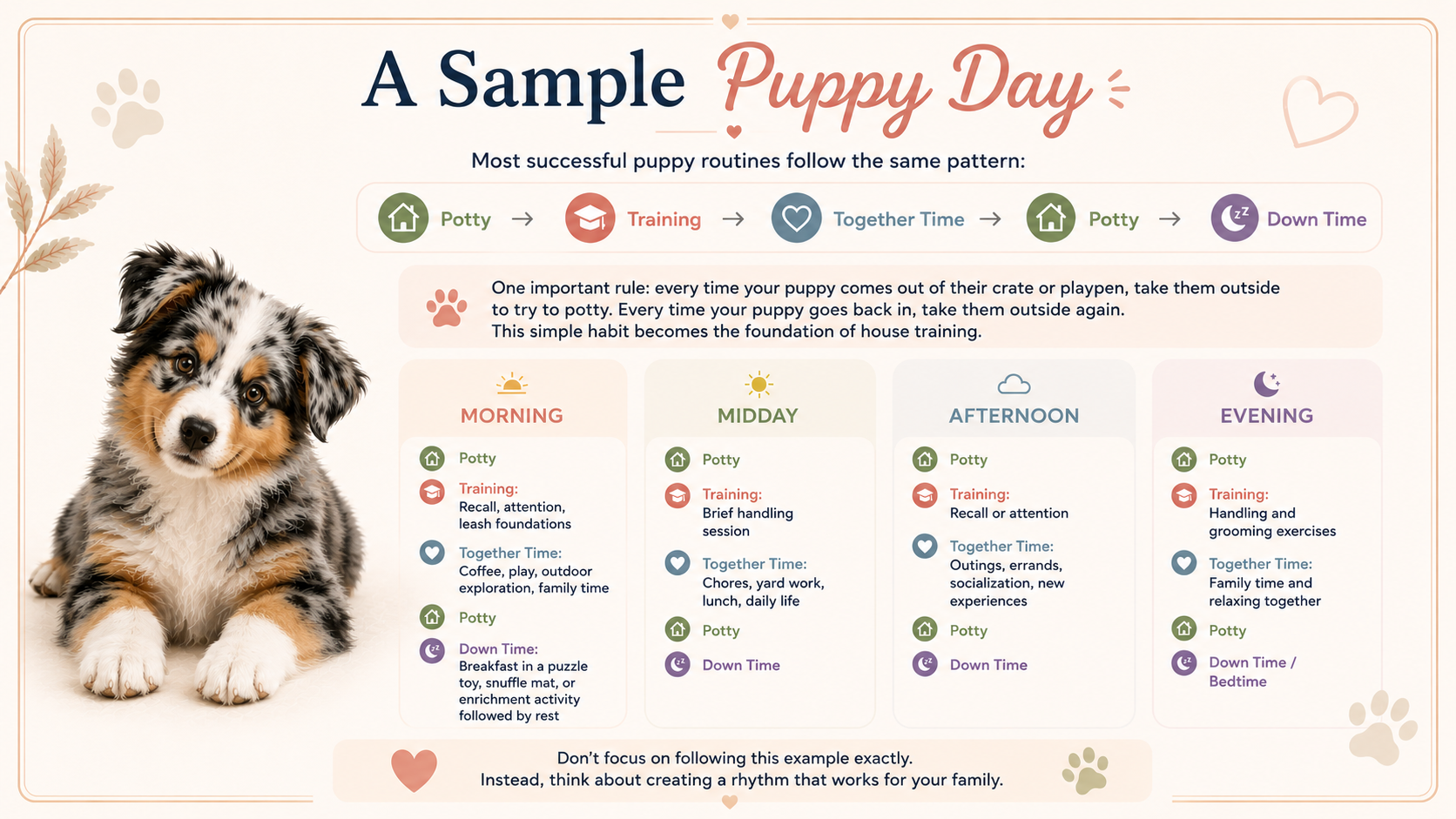
Most successful puppy routines follow the same pattern:
Potty → Training → Together Time → Potty → Down Time
One important rule: every time your puppy comes out of their crate or playpen, take them outside to try to potty. Every time your puppy goes back in, take them outside again. This simple habit becomes the foundation of house training.
Morning
Potty
Training: Recall, attention, leash foundations
Together Time: Coffee, play, outdoor exploration, family time
Potty
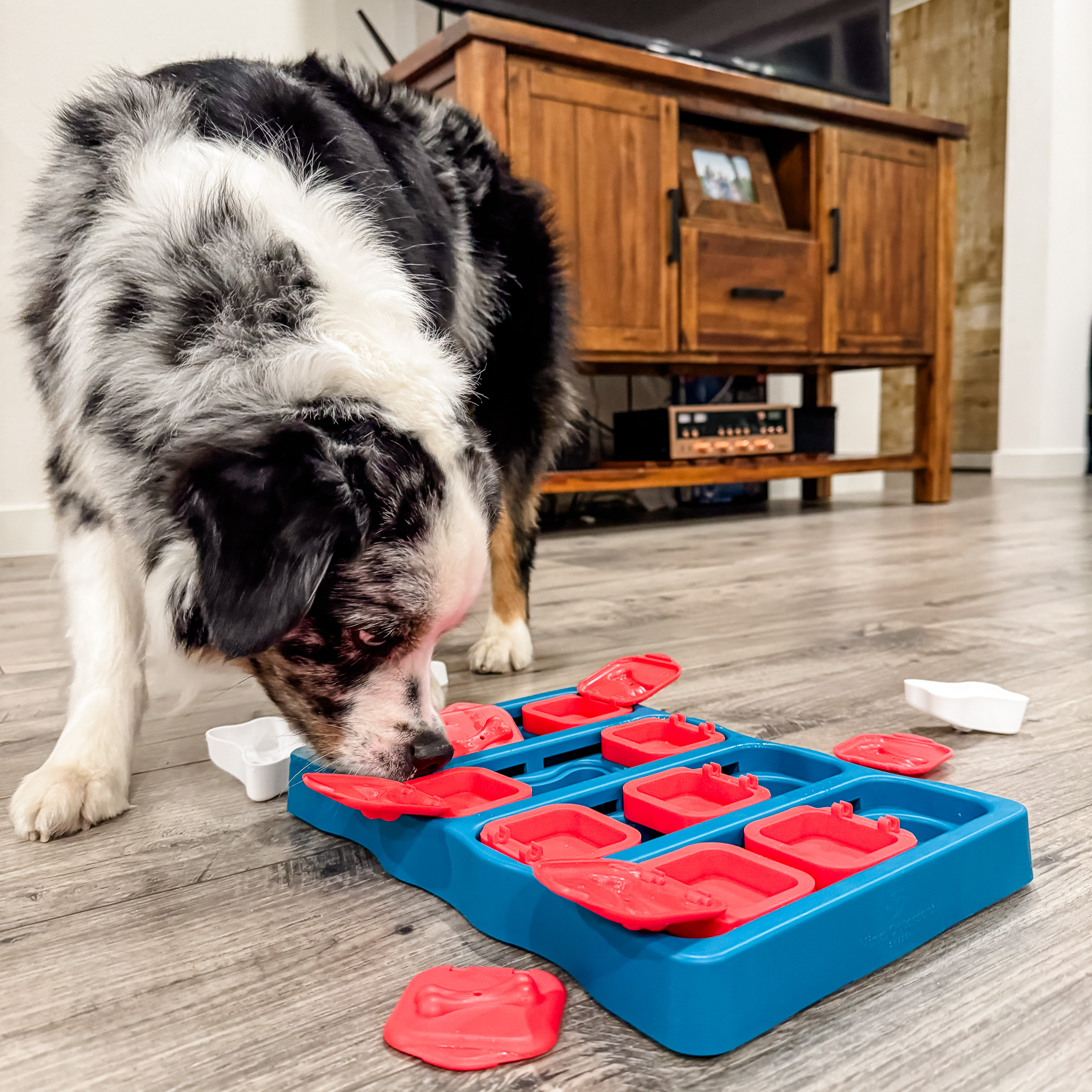
Down Time: Breakfast in a puzzle toy, snuffle mat, or enrichment activity followed by rest
Midday
Potty
Training: Brief handling session
Together Time: Chores, yard work, lunch, daily life
Potty
Down Time
Afternoon
Potty
Training: Recall or attention
Together Time: Outings, errands, socialization, new experiences
Potty
Down Time
Evening
Potty
Training: Handling and grooming exercises
Together Time: Family time and relaxing together
Potty
Down Time / Bedtime
Don’t focus on following this example exactly. Instead, think about creating a rhythm that works for your family.
A Quick Note on Feeding & Enrichment
Personally, I prefer feeding puppies twice daily, and during these first few weeks I use much of their daily food allowance for training, enrichment, and relationship-building activities.
Rather than simply placing food in a bowl, think about ways to turn mealtime into a project.
Some simple ideas include:
- Scatter feeding in the grass
- Towels with kibble folded inside
- Cardboard boxes filled with paper
- Empty plastic water bottles (labels, caps, and rings removed)
- Snuffle mats
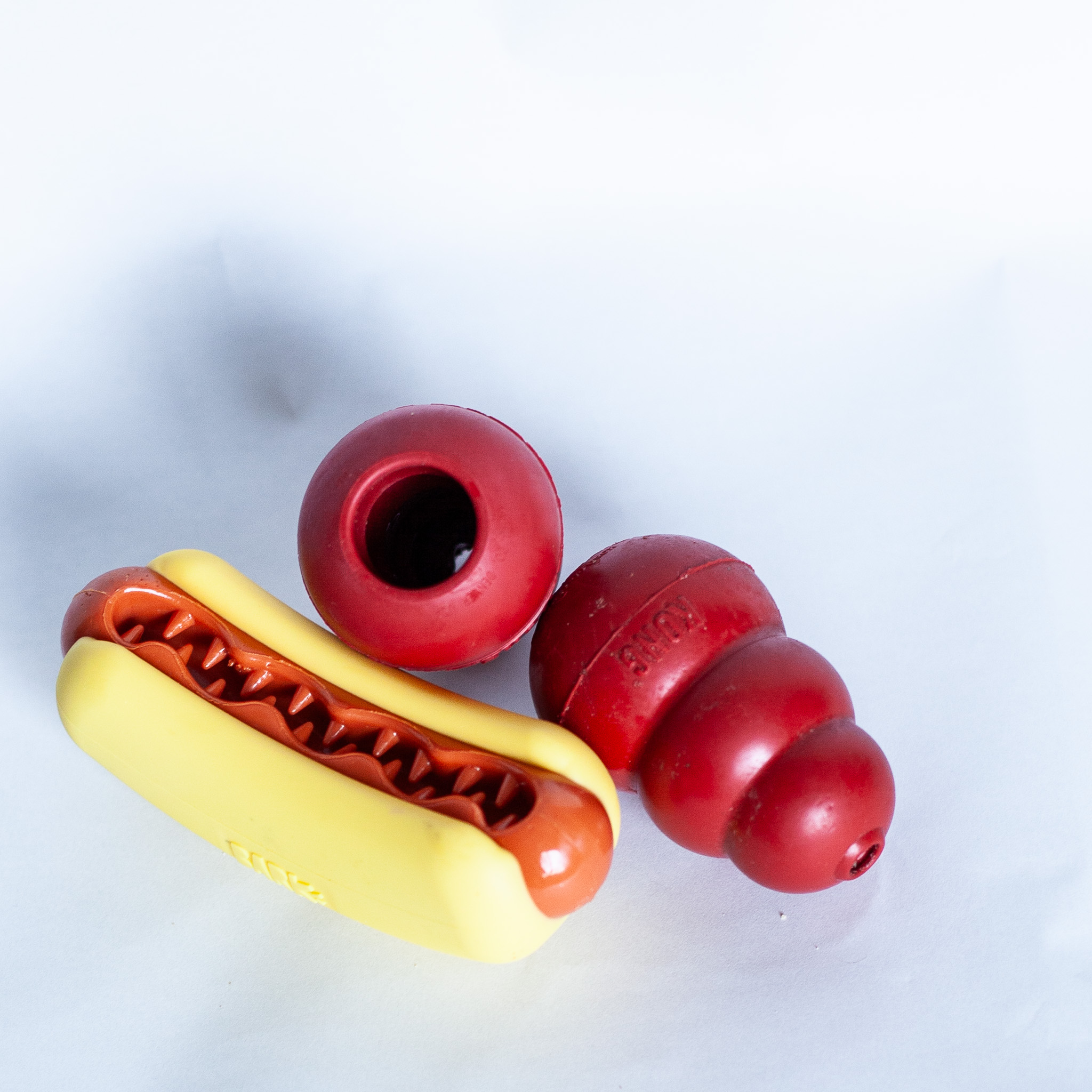
- Food-dispensing toys
- Puzzle feeders
- Training sessions using kibble as rewards
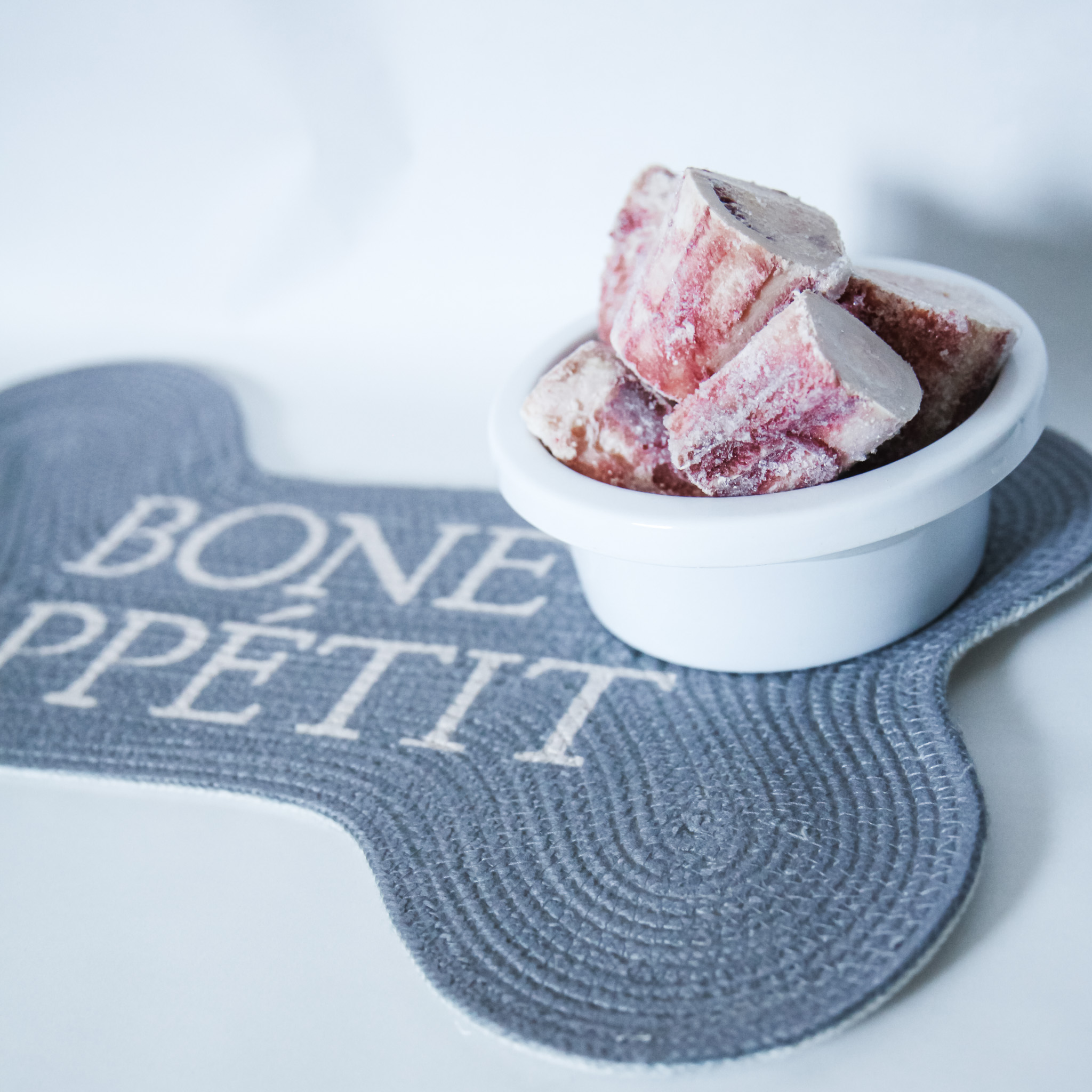
Puppies also benefit tremendously from appropriate chewing opportunities. Bully sticks, collagen chews, raw meaty bones (when appropriate and supervised), and other puppy-safe chews can all be valuable enrichment tools.
You don’t need fancy equipment. A towel, a cardboard box, or a handful of kibble tossed into the lawn can be just as enriching as an expensive puzzle toy.
A puppy who has spent time sniffing, exploring, chewing, and working for their food is often much more satisfied—and much more ready for a good nap afterward.
The Secret: Protect the Down Time
Most puppy owners worry about whether they are doing enough with their puppy.
More often, I find families are doing too much.
An overtired puppy can look remarkably similar to a hyper puppy. Zoomies, biting, barking, difficulty settling, and crankiness are often signs that your puppy needs a nap rather than more stimulation.
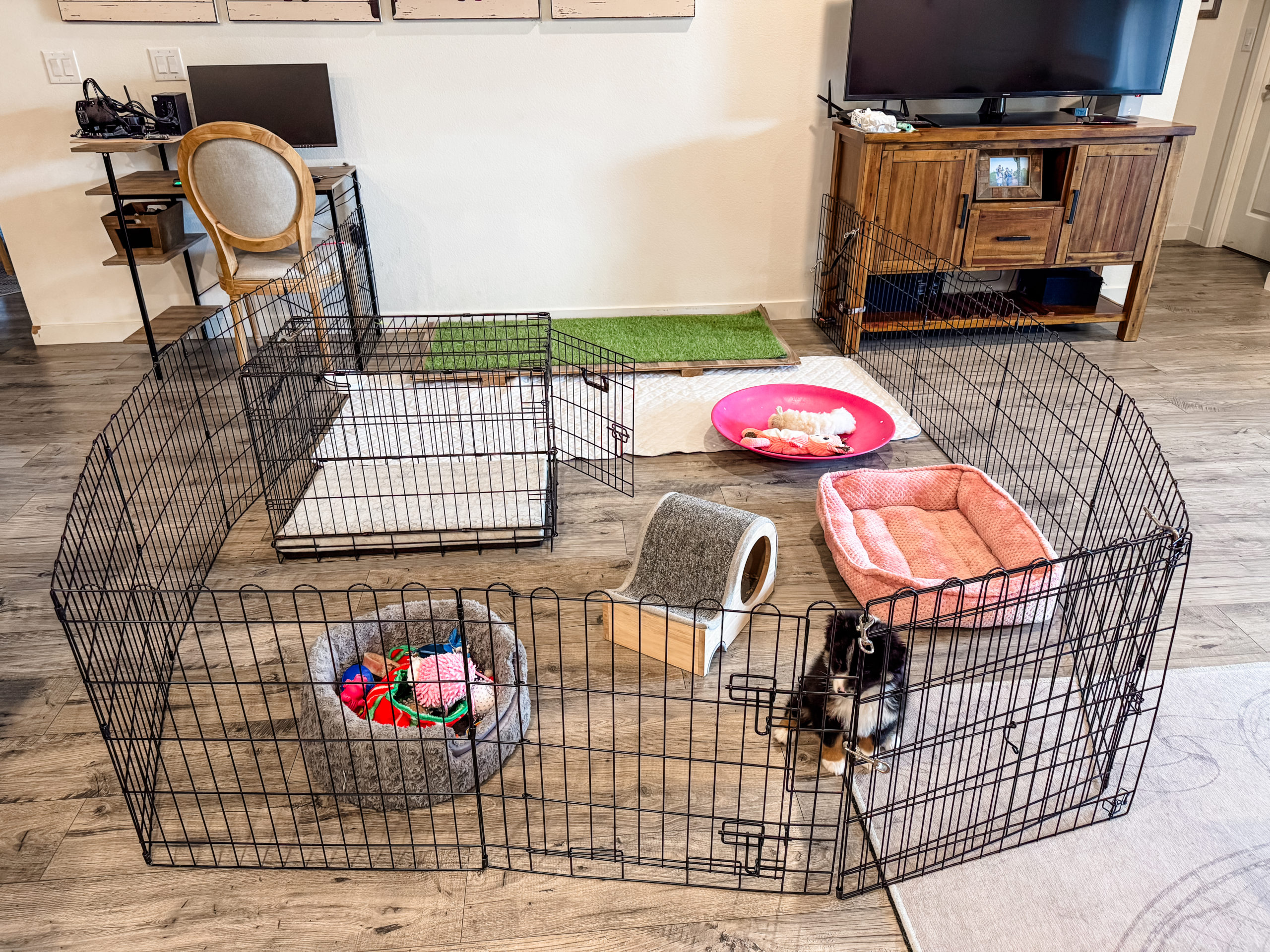
Don’t be afraid to use your puppy’s playpen, crate, or puppy area to help them recharge.
Suggested Week 2 Active Training
Remember that socialization, crate/confinement skills, and active together time happen naturally throughout your puppy’s day. This schedule refers only to your intentional training sessions.
Every Day
- Recall practice (5–10 random recalls)
- Body Handling (“Taming” session)
5 Days This Week
- Leash Walking Session (60–90 seconds)
3 Days This Week
- Attention Session (approximately 10 repetitions)
2 Days This Week
- Resource Guarding Prevention Session
Ongoing
- Socialization through everyday life, outings, errands, visitors, and new experiences
- Crate training/ Confinement Skills, and Independence: Incorporated to routine during Downtime
Remember, these exercises should fit into your routine—not become your routine. Most training sessions should last only 60–90 seconds. The majority of your puppy’s learning will happen through daily life, not formal training.