

Welcome Home, Puppy!
First, congratulations! Your puppy is finally home, and a wonderful adventure is about to begin.
Those first few days are exciting, emotional, and sometimes a little overwhelming. It is completely normal to feel like there are a hundred things you should be doing. The good news? You do not need to do everything at once.
One of the best resources available to help guide you through this transition is the Puppy Culture online course “With Open Arms and a Level Head.” Every EverSummer family receives complimentary access to this course because I truly believe it is one of the most valuable resources available for new puppy owners. There are over 70 minutes of content dedicated to Week 1 alone.
If you have not already done so, I highly encourage you to begin watching the course before your puppy comes home—or as soon as possible afterward. I also find it especially helpful to print the four lesson handouts, which are organized by week and provide an easy roadmap for your puppy’s first month at home.
The course covers everything from preparing for puppy pickup and the ride home to setting up a puppy playpen, creating routines, handling common challenges, and building confidence in your new companion.
Most importantly, it helps establish the right priorities.
We’ve already started working on many of these foundations before your puppy ever leaves EverSummer Minis. Your job now is simply to continue building on them during these first few weeks at home.

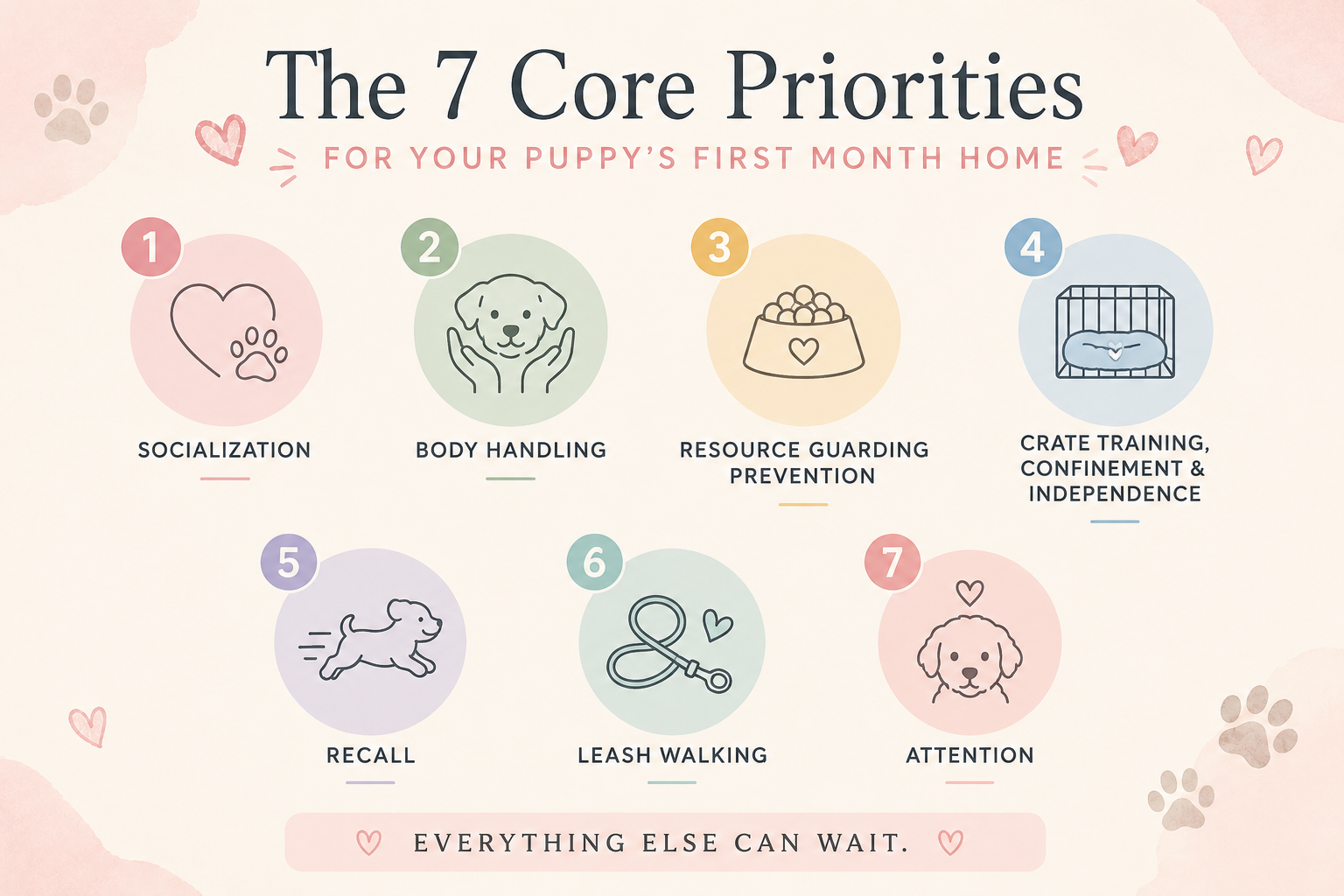
The 7 Core Priorities for Your Puppy’s First Month Home
During your puppy’s first month home, focus primarily on these seven areas:
- Socialization – Creating positive experiences with new people, places, sounds, surfaces, and environments.
- Body Handling – Helping your puppy become comfortable with grooming, veterinary care, nail trims, and being touched all over.
- Resource Guarding Prevention – Teaching your puppy that people approaching food, toys, and valued items is a good thing.
- Crate Training, Confinement Skills, and Independence – Helping your puppy learn to relax alone and preventing separation-related challenges before they begin.
- Recall (Come When Called) – Arguably the most important behavior your dog will ever learn.
- Leash Walking – Building connection and engagement before expecting perfect loose-leash walking.
- Attention – Teaching your puppy that checking in with you is rewarding and valuable.
These seven areas form the foundation of your puppy’s first four weeks at home.
Everything else can wait.
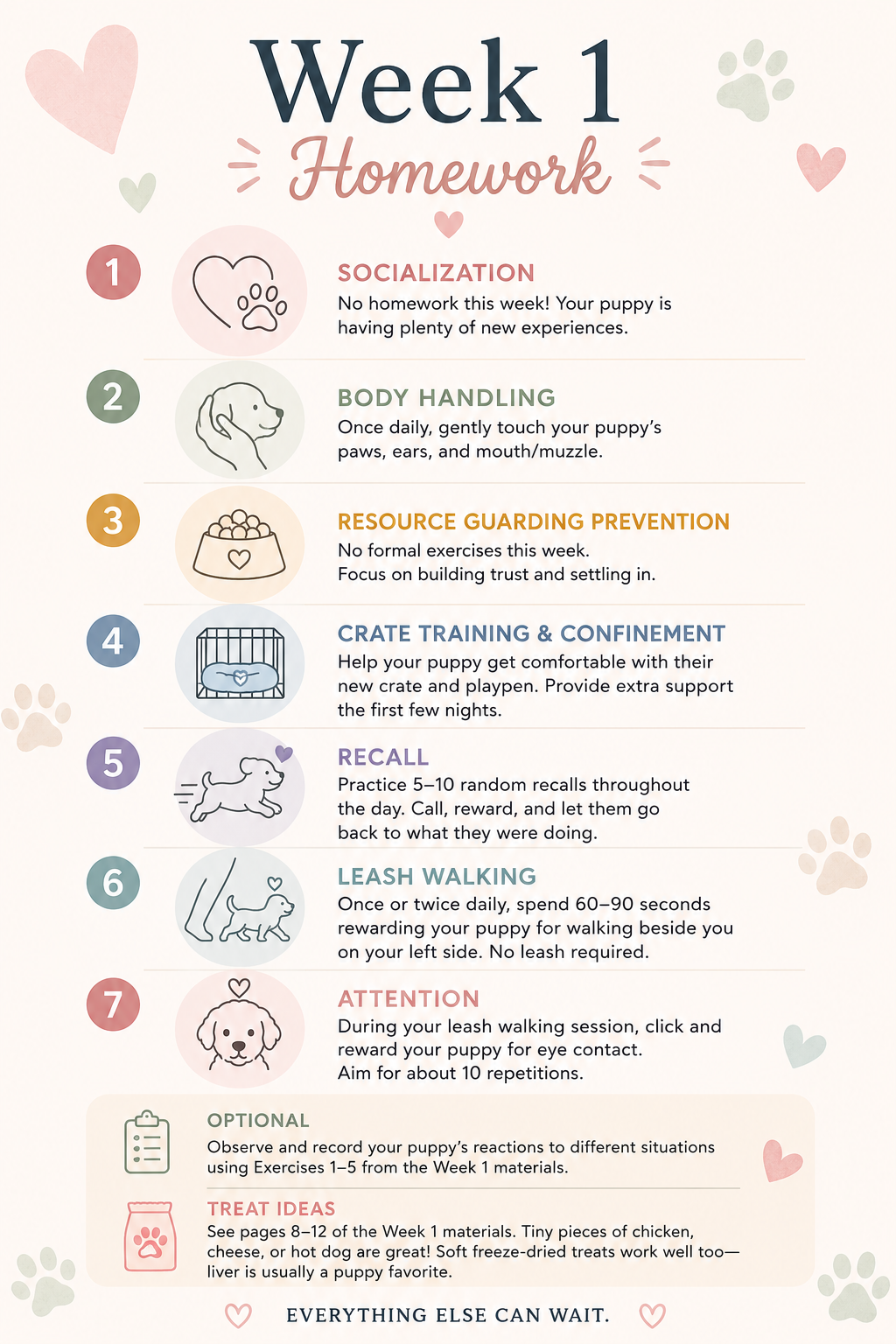
Week 1 Homework: Keep It Simple
The first week home is all about helping your puppy adjust to a brand-new environment, routine, and family. Focus on the foundations and enjoy getting to know your puppy.
1. Socialization
No homework this week! Moving into a new home provides plenty of new experiences, people, sounds, smells, and routines.
2. Body Handling
Once daily, gently touch your puppy’s paws, ears, and mouth/muzzle while offering praise or treats.
3. Resource Guarding Prevention
No formal exercises this week. Focus on building trust and helping your puppy settle in.
4. Crate Training & Confinement
Help your puppy become comfortable with their new crate and playpen. Provide extra support during the first few nights as they adjust to sleeping away from their littermates.
5. Recall
Practice 5–10 random recalls throughout the day. Call your puppy, reward generously, and then let them return to what they were doing.
6. Leash Walking
Once or twice daily, spend 60–90 seconds rewarding your puppy for walking beside you on your left side. No leash is required.
7. Attention
During your leash walking session, click and reward your puppy for voluntarily making eye contact with you. Aim for about 10 repetitions.
Optional
Observe and record your puppy’s reactions to different situations and experiences using Exercises 1–5 from the Week 1 materials. This can help you identify areas where your puppy is naturally confident and areas where they may benefit from additional support in the future.
Treat Ideas
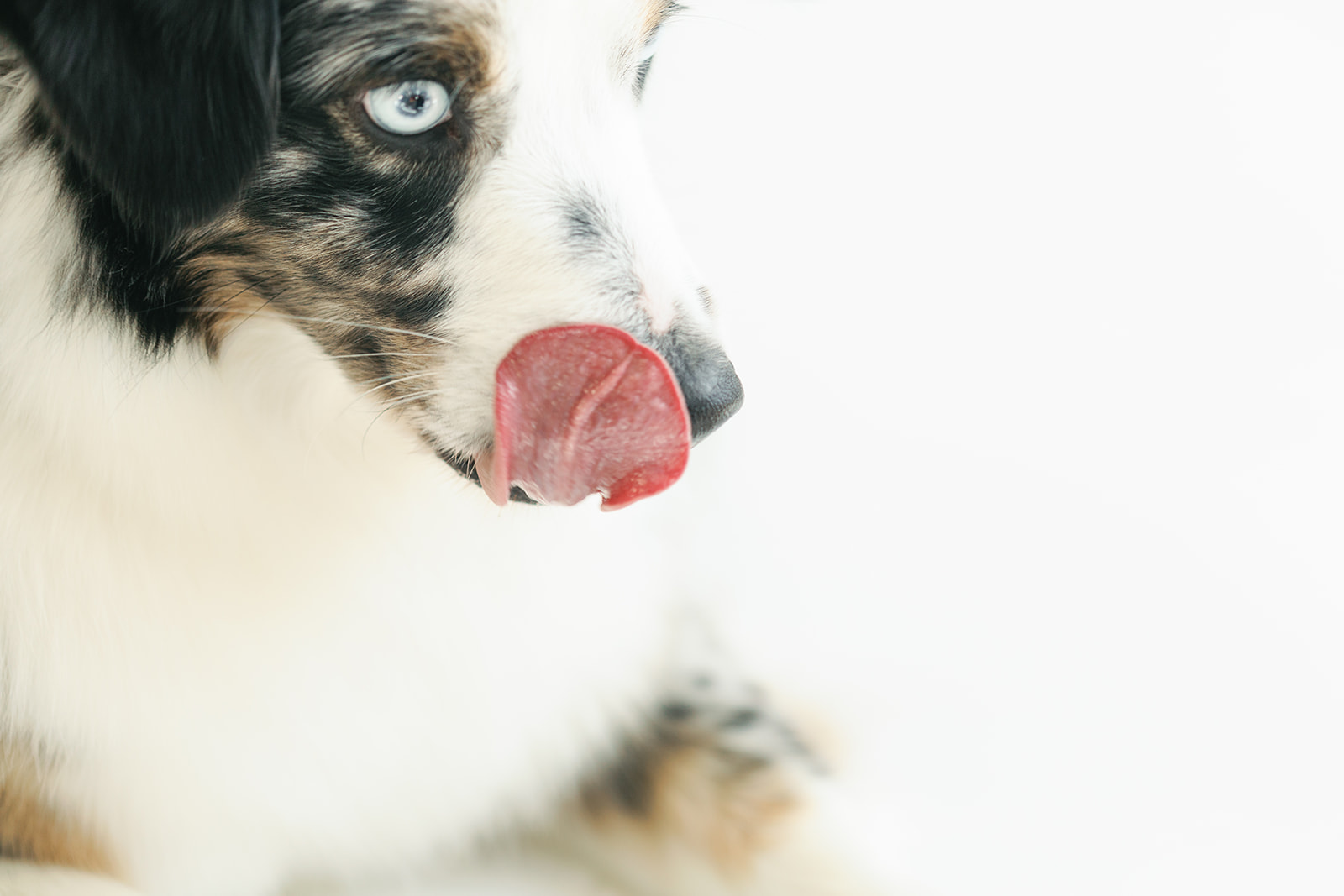
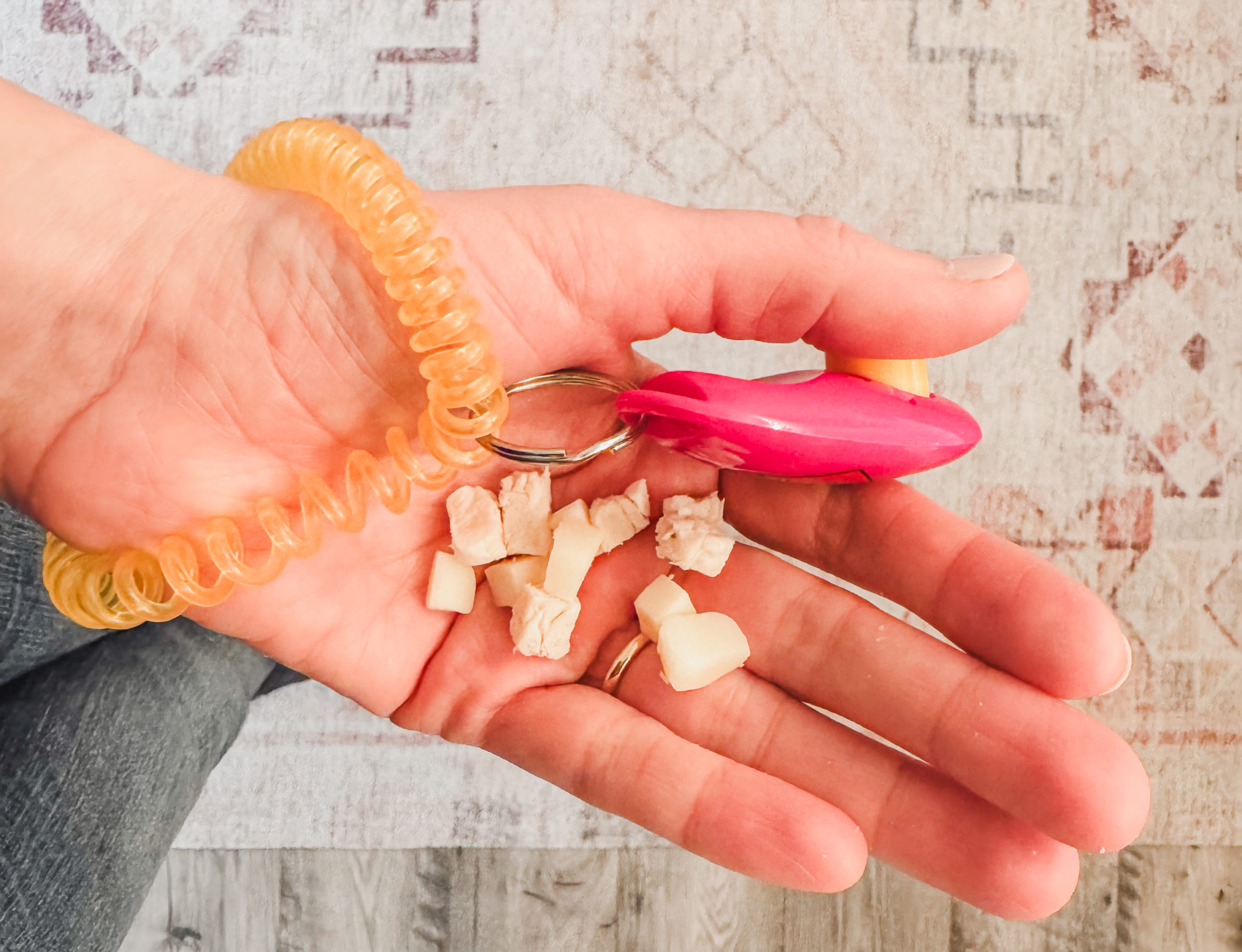
For treat ideas, see pages 8–12 of the Week 1 printed materials. Personally, I love using tiny (and I mean tiny!) pieces of chicken, cheese, or hot dog for training. For convenience, soft freeze-dried treats also work wonderfully, and liver is usually a puppy favorite.
That’s it! If you accomplish these few exercises while loving on your puppy and helping them adjust to their new home, you are off to a fantastic start.
The goal during this stage is not perfection. The goal is to build trust, confidence, and a strong relationship with your puppy while creating habits that will last a lifetime.
Enjoy the journey. Take lots of photos. Celebrate small victories. And remember—you are not raising the perfect puppy in four weeks. You are laying the foundation for the wonderful dog your puppy will become.